⏱ 8 Minute Read
Last Updated: November 15 2026
I have been in residential property management since 2012. In that time I have placed thousands of tenants, managed portfolios for landlords and investors, and earned my MPM® and RMP® designations through NARPM. Now I spend most of my days helping property managers get found online.
Here is what I have learned on both sides of the desk: owners want a manager they can trust, and Google wants to show them one. If your company does great work but does not show up when an owner searches, that great work stays a secret.
This guide covers what residential property management really includes, what owners look for, and the exact search steps that help residential property management companies win more doors.
What Is Residential Property Management?
Residential property management is the job of running homes that people live in on behalf of the owner. That includes single-family homes, condos, townhomes, duplexes, and small multifamily buildings.
A professional manager protects the owner's investment and gives residents a safe, well-kept place to live. In return, the owner pays a monthly management fee, plus a few one-time fees like leasing or renewal fees. If you want to see how those numbers compare across the country, our guide to average property management fees breaks it down.
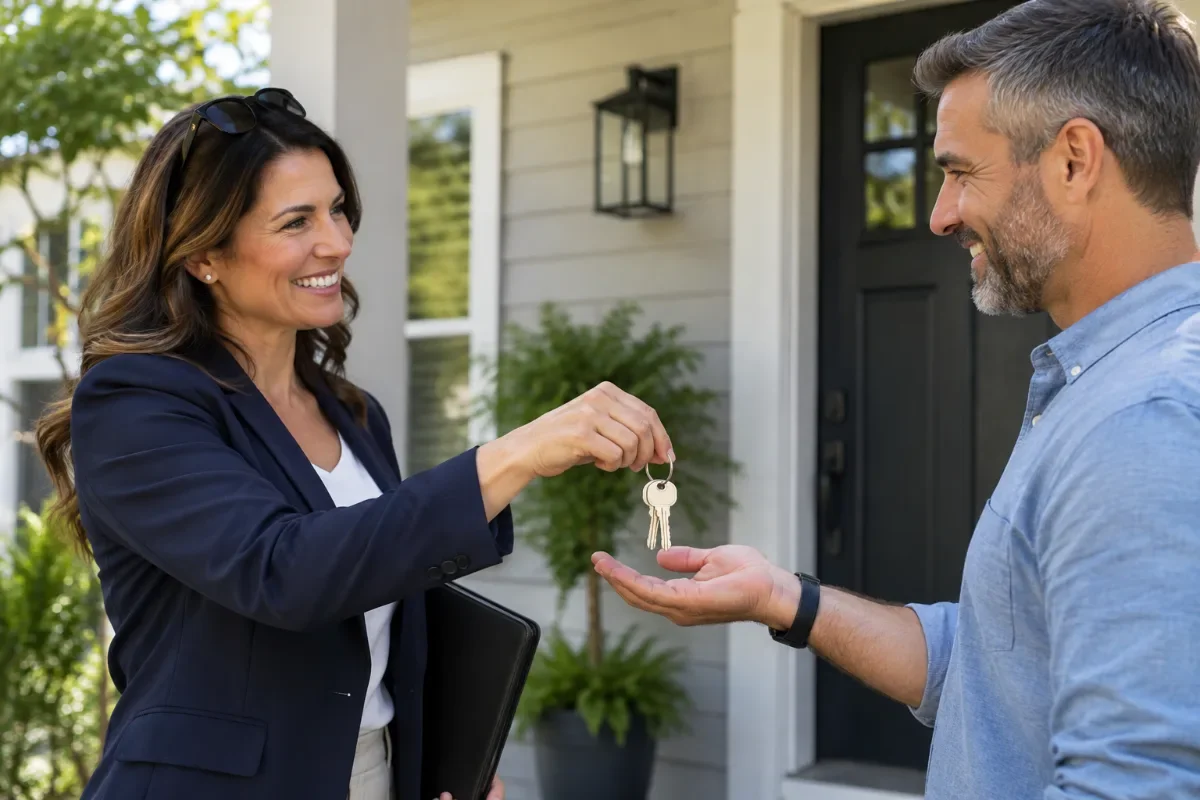
A residential property manager finds and screens tenants, collects rent, handles repairs, inspects the home, follows local rental laws, and sends the owner clear monthly reports. The owner gets income without the late-night maintenance calls.
What Residential Property Management Services Include
When owners search for residential property management services, they want to know exactly what they get. Your website should spell it out. Here is the core service list most strong companies offer:
- Marketing and leasing. Professional photos, online listings, showings, and fast lease-up to cut vacancy time.
- Tenant screening. Credit, income, rental history, and background checks that follow fair housing rules.
- Rent collection. Online payments, late fee enforcement, and a clear process when rent is not paid.
- Maintenance and repairs. A trusted vendor network, 24/7 emergency response, and fair pricing.
- Inspections. Move-in, routine, and move-out inspections with photos to protect the property.
- Accounting and owner reports. Monthly statements, year-end tax forms, and an owner portal.
- Legal and compliance support. Leases that follow state and local law, notices, and handling of evictions when needed.
- Turnovers. Cleaning, repairs, and make-ready work between residents.
Do not bury all of this in one paragraph. Owners skim. Use a short section with a clear heading for each service, and link to a deeper page for your most important ones.
Residential vs. Commercial Property Management
Owners sometimes mix these up, so it helps to explain the difference in plain words.
| Feature | Residential | Commercial |
|---|---|---|
| Property types | Houses, condos, townhomes, small apartments | Offices, retail, industrial, warehouses |
| Typical lease length | 6 to 12 months | 3 to 10 years or more |
| Residents | Individuals and families | Businesses |
| Main laws | Landlord-tenant and fair housing laws | Commercial lease and contract law |
| Turnover | More frequent | Less frequent |
Residential managers deal with people's homes, which means more contact, more care, and more rules that protect residents. That is a big part of why experience and training matter so much in this field.
How Owners Choose Residential Property Management Companies
Owners rarely pick the first name they see. They compare. In my experience, here is what moves them to call:
- Reviews. Owners read what other owners and residents say. A steady flow of recent, detailed reviews builds trust fast.
- Credentials. Designations like MPM®, RMP®, and CRMC® from NARPM show a manager has real training and follows a code of ethics.
- Clear pricing. Owners want to know the fees before they call. Hiding them makes people leave your site.
- Local knowledge. Owners want someone who knows their neighborhoods, rents, and local rules.
- Easy contact. A phone number in the header, a short form, and an online booking option.
Every one of these signals can live on your website and your Google listing. That is where search comes in.
What the Search Results Tell Us
We pulled live Semrush data for this keyword group in November 2026. Here is what owners in the United States are searching each month:
| Keyword | Monthly searches | Difficulty | Cost per click |
|---|---|---|---|
| residential property management | 2,900 | 17 (easy) | $5.50 |
| residential property management companies | 1,600 | 68 (hard) | $5.96 |
| residential property management services | 480 | 64 (hard) | $4.26 |
| residential management | 390 | 37 (medium) | $3.20 |
| residential property management company | 140 | 60 (hard) | $5.96 |
Two things jump out.
First, the main term, "residential property management," gets the most searches and has the lowest difficulty. That is a real opening, even for a newer website.
Second, advertisers pay around $5 to $6 for one click on these terms. That tells you these searchers are worth money. Ranking for them without paying for every click is a big win.
The search results pages also show special features: an AI Overview, a local map pack, reviews, videos, and "People also ask" questions. Each feature is a door you can walk through. The steps below show you how.
How to Rank for Residential Property Management
1. Build a dedicated residential service page
Your homepage cannot rank for everything. Create one strong page about your residential property management services, written for owners in your market. Include your service list, your fees or a fee range, your service area, your credentials, and real owner reviews.
Want the page to work hard? Look at the website features owners expect before they ever pick up the phone.
2. Win the local map pack
The local pack shows up for most of these searches. Your Google Business Profile decides whether you appear there. Pick the right primary category, list every service, add real photos, and post updates often. Our guide to local SEO for property managers walks through each step.
3. Make reviews a weekly habit
Reviews show up right in the search results for this keyword. Ask happy owners and residents for a review after good moments, like a fast repair or a smooth lease-up. Reply to every review, good or bad, with a calm and professional tone.
4. Add short videos
Video results appear for these searches too. You do not need a film crew. Record a two-minute "What our residential property management includes" video on your phone, post it to YouTube, and embed it on your service page.
5. Answer the questions owners ask
"People also ask" boxes are full of owner questions. Add a short FAQ section to your service page and answer each question in two or three plain sentences. Add FAQ schema so search engines understand it. Research the exact phrasing with our list of property management keywords.
6. Earn a spot in Google's AI answers
Google now shows an AI Overview for "residential property management." AI tools pull from pages that give short, clear, trustworthy answers. Start key sections with a one- or two-sentence direct answer, then go deeper. We cover this in detail in our guide to AI Overviews for property managers.
7. Show off your credentials
Put your NARPM membership and designations on your service page, about page, and Google profile. These are trust signals for owners and for search engines. They also set professional managers apart from someone doing it on the side.
"Residential management" is a mixed term. Some people searching it want an apartment community or an HOA manager, and Google shows a knowledge panel for it. Use it as a supporting phrase, but build your page around "residential property management" and "residential property management services," where the intent is clearly owners looking to hire.
Common Mistakes That Cost Residential Managers Leads
- One page for every property type. If you also do HOA or commercial work, give each its own page so Google knows which page fits which search.
- No fees anywhere. Even a "starting at" price keeps owners on your site longer.
- Old reviews. Ten reviews from 2021 lose to fifty from this year.
- Slow, hard-to-use mobile sites. Most owners search on their phones.
- No clear next step. Every page should end with a call, a form, or a booking link.
The Bottom Line
Residential property management is a trust business. Owners hand you one of the biggest investments they will ever make. The companies that win are the ones who show that trust online, with clear services, real reviews, strong credentials, and helpful answers right where owners are searching.
The good news is that the main keyword is still very winnable. With the right page and a steady local plan, a professional residential manager can show up for the owners who need them most.
ClearLead Digital was created by property managers for property managers. Our property management SEO services help residential managers rank, earn reviews, and turn searches into signed management agreements. Book a free strategy call and we will show you where your next doors are hiding.
Frequently Asked Questions
What is residential property management?
Residential property management is the day-to-day running of homes people live in, like single-family houses, condos, townhomes, and small apartment buildings. A manager handles leasing, tenant screening, rent collection, maintenance, inspections, and owner reporting for a monthly fee.
What services do residential property management companies offer?
Most residential property management companies offer marketing and leasing, tenant screening, rent collection, maintenance coordination, inspections, owner statements, and help with local and state rental laws. Many also handle move-ins, move-outs, and turnovers.
How do residential property management companies get more owner leads?
The best owner leads come from search. Build a strong residential property management service page, keep your Google Business Profile active, earn steady reviews, publish short videos, and answer the questions owners ask Google. Then make it easy to call or book online.
Is residential property management the same as residential management?
They overlap, but not fully. "Residential management" is broader and can also mean community or HOA management. Searchers use it for both, so a residential property management company should still say clearly that it manages rental homes for owners.