Why Your Property Management Blog Should Not List Your Company as the Author
⏱ 6 Minute Read
Last Updated: August 21, 2026
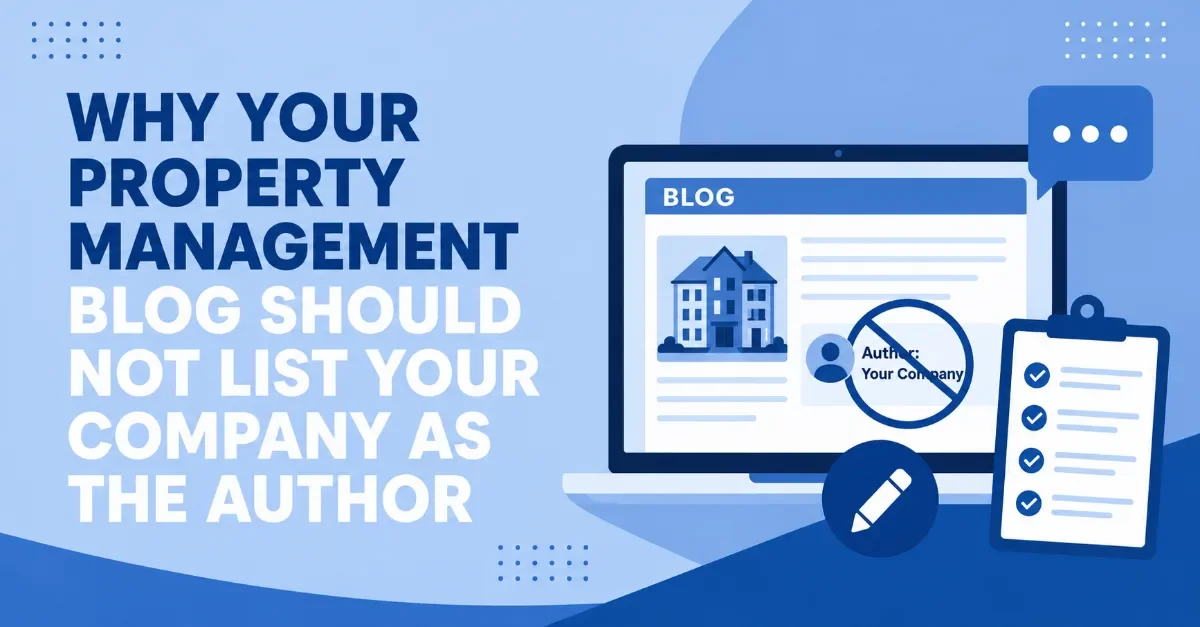
Open your blog and look at the byline. If it says "ABC Property Management" instead of a person's name, you are handing away one of the easiest trust signals your website has.
This is one of the most common issues we see when we audit a property management website. The content is fine. The advice is solid. But every post is credited to a logo, and both readers and search engines are left guessing who actually knows this stuff.
Here is why the property management blog author field matters more than most owners think, and how to fix it in an afternoon.
Google evaluates people, not logos
Google's quality guidelines are built around four things: experience, expertise, authoritativeness, and trust. The shorthand is E-E-A-T. That first E, experience, was added because Google wanted content from people who have actually done the thing they are writing about.
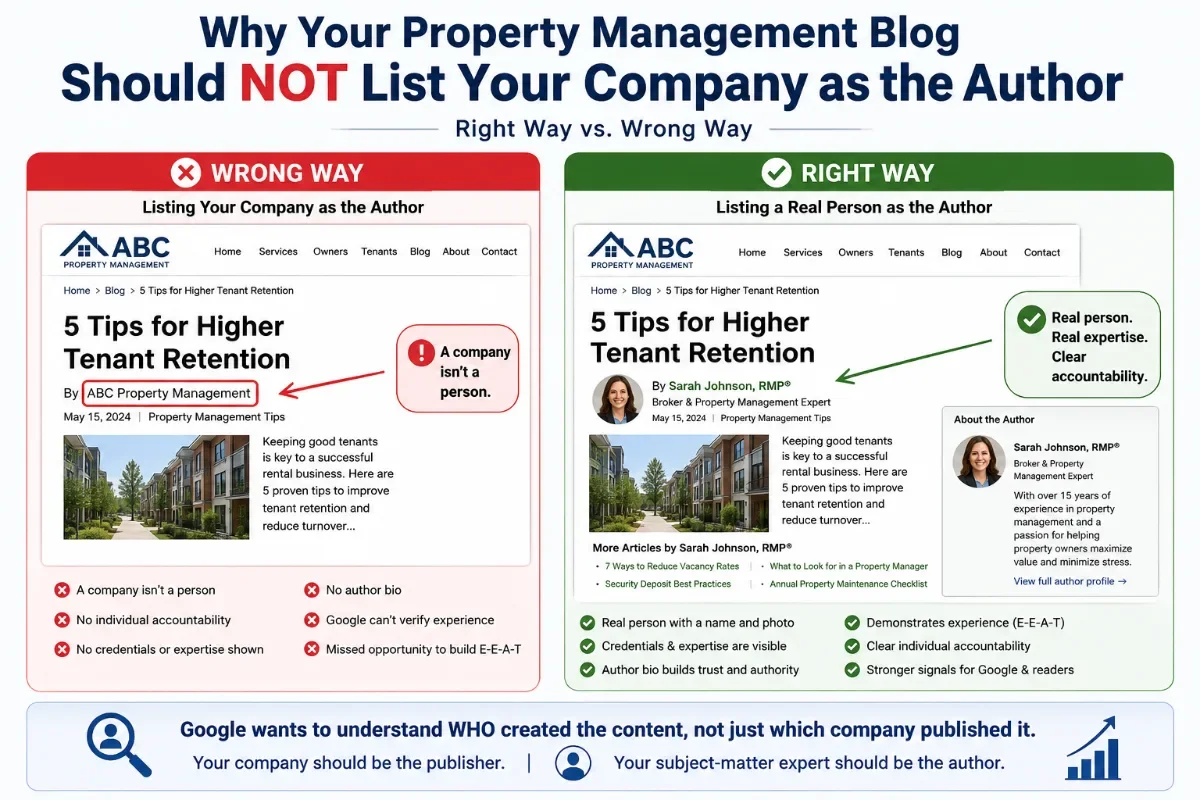
Now think about what a company byline communicates. "ABC Property Management" has not personally handled a security deposit dispute. It has not walked a unit after a tenant moved out at 2 a.m. A person did that. When you publish under a company name, you erase the exact signal Google added to its guidelines.
A named author gives Google something it can evaluate. It can connect your author page to a LinkedIn profile, a NARPM member listing, a conference speaker page, a podcast appearance, and a state license record. That web of connections is what topical authority is built from, and a logo cannot carry any of it.
AI search tools look for named experts
More owners are starting their search in AI tools now. They type "how do I choose a property manager in Tampa" into ChatGPT, Google AI Overviews, or Perplexity, and they read the summary instead of clicking ten blue links.
Those systems are trying to answer one question before they cite you: is this source credible? They look for authorship, credentials, and consistency across the web. Content with a real author attached, a bio, and matching profiles elsewhere is far easier for a language model to treat as an authoritative source than an unsigned company post.
This is the whole idea behind AI search visibility. You want the model to associate a person with a topic, and your company with that person. A blank byline breaks the first link in that chain.
Search your own name plus your city in an AI tool. If nothing comes back, your expertise exists only inside your office. Bylines are one of the cheapest ways to start changing that.
Owners hire people, not brands
Set the SEO aside for a second. An owner reading your article on rent-ready turnovers is quietly deciding whether they would trust you with a $400,000 asset.
A post signed by a company reads like a press release. A post signed by "Maria Delgado, RMP®, Director of Property Management, 11 years in the Orlando market" reads like advice from a professional. Same words. Completely different feeling.
Property management is a relationship business. Your blog is often the first conversation an owner has with your team, and they have it without you in the room. Give them a person to meet.
Your designations are doing nothing in the footer
This is the part that frustrates me most. Professional property managers earn real credentials. The MPM® and RMP® designations through NARPM take years of documented management experience, education hours, and service to the industry. Your state license required study and continuing education.
Then all of that sits in a footer logo strip that nobody reads.
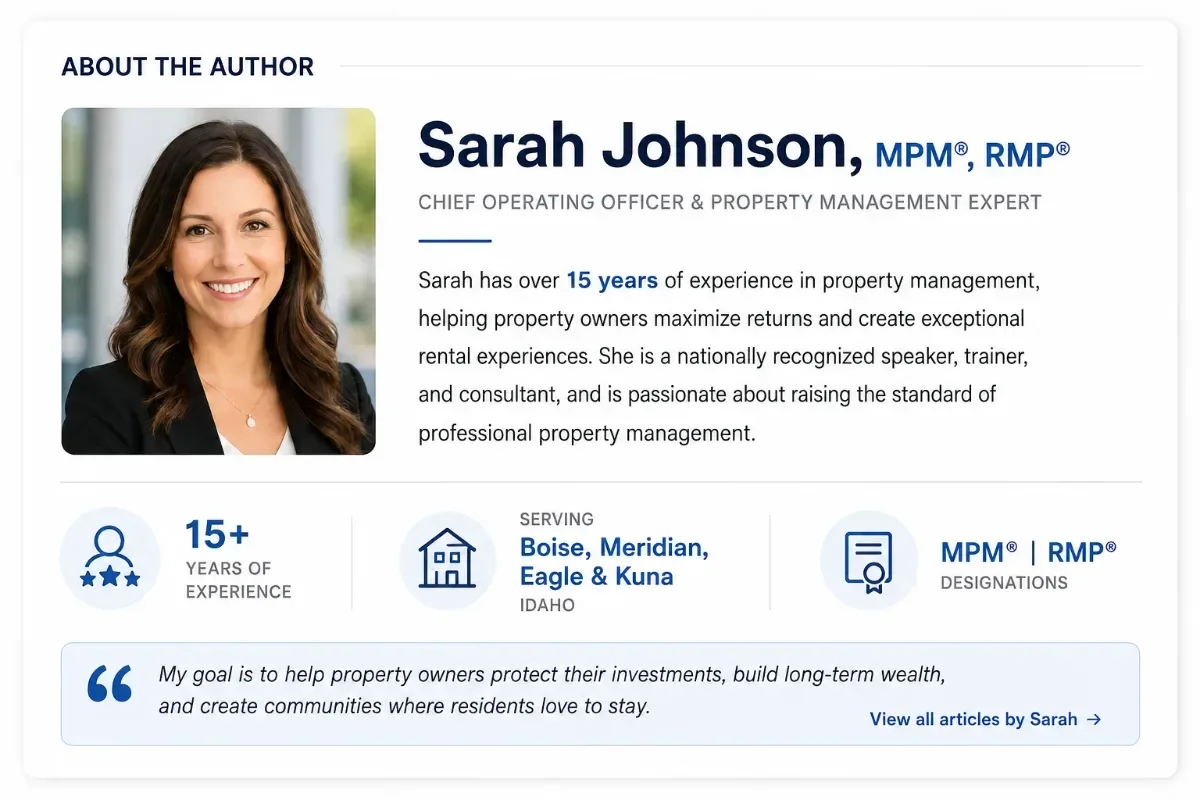
An author bio is the right place for it. When a designation appears next to a name, on an author page, on every article that person writes, it starts doing work. It tells owners you are held to a code of ethics. It tells Google this person is verifiable. It separates you from the operator down the street who manages forty doors out of a spare bedroom and writes the same generic advice.
The four objections we hear most
"Different people write our posts."
Good. Use two to four authors and match them to their real work. Your leasing manager signs the leasing posts. Your maintenance coordinator signs the maintenance posts. That is more credible than one voice pretending to know everything.
"Our agency or a freelancer writes them."
The byline should say who stands behind the advice, not who typed the first draft. Have your subject matter expert read it, fix what is wrong, add a real example from your market, and publish it under their name. That review step also makes the content better.
"What if that person leaves?"
You reassign the posts to a current team member and update the bio page. It takes minutes. Compare that to years of content that never built authority for anyone.
"Our team does not want to be public."
Start with one person, usually the owner, broker, or director. One credible author beats zero. You can add others later as people get comfortable.
How to fix your bylines this week
- Pick your authors. One to four people, chosen by what they actually do day to day.
- Build a real author bio page for each one at a clean URL such as
/about/first-last/. - Write a bio with substance. Years in the industry, market served, designations, license, doors managed, association roles, and what they specialize in.
- Add a real headshot. Not a stock photo, and not the company logo.
- Link out to matching profiles. LinkedIn, your NARPM member profile, speaking pages, podcast appearances. Consistency across those profiles is what confirms the person is real.
- Put the byline at the top of every post with the author name, credentials, and a publish or updated date.
- Add a short bio block at the bottom of each article that links to the full author page.
- Reassign your existing posts. Go back through the archive and give every article a human author.
- Update your author schema so the markup matches what visitors see.
The author schema to add
Most property management sites publish BlogPosting schema with the author set to
Organization. That is the code version of the same mistake. Point the author at a
Person instead, and give that person their own entity with credentials and profile
links.
{
  "@context": "https://schema.org",
  "@type": "BlogPosting",
  "headline": "How to Prepare Your Rental for a New Tenant",
  "author": {
    "@type": "Person",
    "name": "Maria Delgado",
    "url": "https://example.com/about/maria-delgado/",
    "jobTitle": "Director of Property Management",
    "honorificSuffix": "RMP®",
    "memberOf": {
      "@type": "Organization",
      "name": "National Association of Residential Property Managers (NARPM)"
    },
    "sameAs": ["https://www.linkedin.com/in/example/"]
  },
  "publisher": {
    "@type": "Organization",
    "name": "Example Property Management"
  }
}
Author schema is not a magic ranking button. What it does is remove ambiguity. It tells search engines exactly which person wrote the article and where else that person exists online, which is the same connection AI tools are trying to make when they decide who to cite.
The markup has to match the visible page. If your schema says Maria wrote it, Maria's name needs to be on the page too. Mismatched markup is a trust problem, not a shortcut.
The takeaway
Your company name belongs in the publisher field, on the logo, and in the footer. It does not belong in the author field.
The people on your team are the reason owners stay. They hold the designations, they know the market, and they solve the problems your blog talks about. Put their names on the work. It costs nothing, it takes an afternoon, and it turns a blog that reads like a brochure into one that reads like it came from professionals.
We audit property management websites for exactly this kind of gap, from author signals and schema to the content that actually brings in owner leads. See how property management SEO works when it is built for this industry only, or book a strategy call and we will walk your site with you.
Frequently Asked Questions
Should a property management blog use a person or the company as the author?
Use a named person. A real author with a bio, a photo, and verifiable credentials gives search engines and readers something to evaluate. A company name tells them almost nothing about who has the experience behind the advice.
What if our blog posts are written by an agency or a ghostwriter?
Have the subject matter expert at your company review, correct, and approve the post, then publish it under that person's name. The byline should reflect who stands behind the advice, not who typed the first draft.
What happens to old blog posts if the author leaves the company?
Reassign the posts to a current team member, update the author bio page, and note that the article was reviewed and updated on a new date. Nothing breaks, and the content stays accurate.
Does author schema markup help a property management website rank?
Author schema is not a direct ranking factor, but it helps search engines and AI tools connect an article to a real person and to that person's credentials, designations, and profiles elsewhere on the web. That connection supports the experience and expertise signals Google looks for.
How many authors should a property management blog have?
Two to four is plenty for most companies. Match each author to the topics they actually handle, such as leasing, maintenance, or owner relations, so every post comes from someone with firsthand experience in that area.