Understanding Schema Markup for Websites

Table of Contents
Schema markup is a powerful tool for websites. It helps search engines understand your content better. This can lead to improved visibility in search results.
But what exactly is schema markup? It's a form of structured data that enhances SEO. By using it, you can make your website more appealing to search engines.
Implementing schema markup can result in rich snippets. These snippets provide additional information in search results. They can increase your click-through rates significantly.
There are different types of schema markup formats. JSON-LD, microdata, and RDFa are the most common. Each has its own benefits and use cases.
Understanding schema markup is crucial for website owners. It can give you a competitive edge in search engine rankings. This guide will help you navigate the complexities of schema markup.
Whether you're a digital marketer or a web developer, schema markup is essential. It can transform how your website appears in search results. Let's dive into the world of schema markup and structured data.
What is Schema Markup?
Schema markup is a form of microdata added to websites. It creates an enhanced description that appears in search results. Often, this leads to the generation of rich snippets.
Think of schema markup as a translator between your website and search engines. It provides a more explicit understanding of your content. Consequently, this helps search engines display your information accurately.
The concept of schema markup stems from structured data, which is a standardized format. It organizes information about a page in a specific manner. Here’s a breakdown of the primary elements:
Items: The objects that schema describes (e.g., articles, products).
Properties: Attributes that give details about items (e.g., author, price).
Values: Actual data for the properties (e.g., "John Doe", "$29.99").
Schema.org is the go-to repository for schema markup. This collaborative community provides shared vocabularies for structured data. It offers a vast library of schemas to implement.
Integrating schema markup into your website's HTML can significantly boost SEO. Although not a direct ranking factor, it influences how search engines interpret pages. Many website owners see increased user engagement after implementation.
Mastering schema markup requires some technical knowledge. Understanding HTML and basic web development is beneficial. However, the investment in learning can result in improved search visibility.
For property managers specifically, schema is just one technical building block inside a broader property management SEO strategy — one that also covers content, local signals, and site structure working together toward the same visibility goal.

The Importance of Structured Data for SEO
Structured data serves as a crucial component in the world of SEO. It helps search engines understand your website’s content more effectively. This understanding is vital for better indexing and presentation.
Implementing structured data can lead to displaying rich snippets in search results. Rich snippets often include additional information like ratings and prices. This enhanced presentation can significantly increase click-through rates.
Search engines like Google and Bing rely on structured data to serve users accurately. By clearly defining your content, you enhance its relevance. This can indirectly benefit your website's ranking.
In addition to improved visibility, structured data helps in organizing information clearly. When search engines find structured data, they process it efficiently. This efficiency translates into more coherent search results.
Benefits of structured data include:
Improved user engagement: With detailed listings, users find the needed information quickly.
Enhanced local SEO: Helps local businesses appear prominently in search results.
Better voice search results: Provides concise answers for voice assistants.
Failing to use structured data might leave your site less competitive. More websites are adopting it, gaining an edge in search results. As the use of structured data grows, it is becoming a standard SEO practice.
To leverage these benefits, website owners must integrate structured data appropriately. Regular updates and compliance with search engine guidelines are essential. This commitment ensures your structured data remains effective.
How Schema Markup Works
Schema markup acts as the translator between your website's content and search engines. When applied correctly, it provides a detailed map of your data. This map enables search engines to navigate your content more intelligently.
The implementation of schema markup requires inserting specific tags into the website’s code. These tags categorize different elements on the page. For example, marking up a product page can include tags for the product's name, price, and reviews.
Common schema elements include:
Articles: Define headlines, date published, and authorship.
Events: Specify dates, locations, and descriptions.
Products: Include attributes like brand, SKU, and price.
The standardized vocabulary for schema markup comes from Schema.org. It offers a shared framework that sites universally adopt. This common language ensures that search engines decode the data accurately.
Different schema formats like JSON-LD, microdata, and RDFa exist for implementing these tags. Each format integrates with webpage code differently, and each has its strengths. Understanding these differences helps in choosing the right schema format.
Schema markup converts complex website data into a simple, readable form. As a result, search engines enhance user experiences with more precise search results. Thus, schema markup is essential for modern websites aiming at effective SEO optimization.
Types of Schema Markup Formats: JSON-LD, Microdata, and RDFa
Schema markup comes in different formats, each serving a unique purpose. The three main types are JSON-LD, Microdata, and RDFa. Understanding their nuances helps in effective implementation.
JSON-LD stands for JavaScript Object Notation for Linked Data. It is Google's recommended format due to its simplicity and flexibility. JSON-LD allows you to place all schema markup in the page header, keeping content and code separate. This makes editing and updating easier without affecting the visual layout.
Microdata integrates directly into the HTML of a page. It uses specific tags to define items and properties. Because Microdata mixes content with code, it may require more effort to maintain. However, it's still effective for embedding detailed metadata within HTML content.
RDFa, or Resource Description Framework in Attributes, is an extension of HTML5. It allows data to be easily parsed by machines. RDFa’s approach is highly semantic, meaning it understands the meaning behind data entries. This makes RDFa suitable for complex data relationships.
Summary of schema formats:
JSON-LD: Recommended by Google for ease of use.
Microdata: Embedded directly in HTML, requiring detailed coding.
RDFa: Semantic-rich, suitable for complex data.
Choosing the right format depends on your technical needs and existing structure. For those using simple websites, JSON-LD offers ease and flexibility. Websites needing rich, detailed data may opt for RDFa or Microdata.
Common Schema Types for Websites
Schema markup offers a variety of types, each designed for specific content. Choosing the correct schema ensures your site is understood by search engines.
One of the most frequently used types is the Product schema. It's vital for e-commerce sites to describe product details clearly. This helps in displaying prices and availability in search results, enhancing user engagement.
Event schema is essential for promoting events. It provides details like dates, locations, and ticket information. This markup helps events appear prominently in search results and improves visibility.
Organization schema defines business details such as name, logo, and contact information. This can help in improving brand recognition and local search rankings, particularly important for businesses with physical locations.
The Person schema is tailored for individuals. It includes data like job titles, education, and contact information. This can enhance personal profiles, especially for public figures and professionals.
A Review schema is useful for any content being rated. Adding review details, such as ratings and descriptions, can improve listings in search engines. This makes them show star ratings and summaries.
A few more popular schema types include:
Article schema: Enhances news articles with headline, date, and author details.
Recipe schema: Ideal for food blogs, detailing ingredients, cooking time, etc.
Video schema: Highlights video content with descriptions and durations.
Choosing the correct schema type not only enhances search visibility but also improves user interaction with rich data displays. Implementing the right schema can significantly improve a website's performance in search engines. Adjust your schema types as your content evolves to maintain visibility. This adaptability is key to leveraging schema markup effectively.
Rich Snippets and Enhanced Search Results
Rich snippets provide a way for search engines to display additional information about webpages. This supplementary information can include ratings, prices, or author details.
By incorporating schema markup, websites can transform how they appear in search results. Rich snippets make a webpage stand out, which can significantly boost click-through rates.
These enhanced search results are visually more appealing compared to standard listings. Users can quickly find what they need without scanning lengthy page descriptions.
Examples of rich snippets include:
Product information: Shows prices and availability.
Event details: Lists dates and locations.
Review ratings: Displays star ratings and reviewer comments.
Rich snippets are not only about aesthetics. They provide critical context for search engines to understand the content better. Implementing schema markup correctly can help your website achieve these enhanced results.
Rich snippets also guide potential visitors, making navigation more efficient. When users see important details easily, they have a better experience. This makes them more likely to connect with your content.
As search engines continue to prioritize user experience, the importance of rich snippets grows even more.
Step-by-Step Guide: How to Implement Schema Markup
Implementing schema markup might seem complex at first. However, breaking it down step-by-step simplifies the process. Start by identifying the type of schema suitable for your content.
Using a tool like Google’s Structured Data Markup Helper can be beneficial. It assists in generating the necessary code. Once you've identified the type, you can begin adding schema markup directly to your HTML.
Choose from formats such as JSON-LD, microdata, or RDFa. JSON-LD is often recommended for its simplicity and ease of integration. It’s added as a block to the HTML head or body.
Ensure the schema markup accurately represents the content on the page. Inconsistencies can lead to penalties from search engines. Testing is crucial at this stage.
Test your code using Google’s Structured Data Testing Tool. This ensures that the markup has been implemented correctly. Make adjustments as necessary until no errors appear.
Once the schema markup is live, continue to monitor it. You can check its performance through Google Search Console. This tool provides detailed feedback on how your structured data is functioning.
Regular updates to your schema are recommended. As your content evolves, the markup must reflect these changes. Keeping schema markup up-to-date ensures optimal results.
Manual Implementation
Implementing schema markup manually is often the method of choice for those comfortable with code. This involves directly embedding the schema within your webpage's HTML. It's important to follow structured data guidelines closely.
Here are some basic steps:
Identify the relevant schema type.
Write the markup in JSON-LD format.
Embed it within your HTML.
Manual setup offers control over how data is structured and displayed. Though more time-consuming, it allows for precise customization tailored to your needs.
Using Plugins and Tools
Not everyone feels comfortable delving into code. Fortunately, many tools simplify schema implementation. Plugins and tools can automate the process, especially for platforms like WordPress.
Popular options include:
Yoast SEO Plugin: Offers robust schema support.
Schema Pro: Specifically designed for adding schema markup.
Google's Structured Data Markup Helper: Assists with schema generation.
These tools offer intuitive interfaces and guided setups. They help ensure your structured data is correctly added, maintaining compliance with search engine guidelines.
Testing and Validating Your Schema Markup
After implementing schema markup, testing is a crucial next step. Without validation, errors could impact how search engines process your data. Mistakes can prevent your website from reaping the benefits of structured data.
Google’s Structured Data Testing Tool is a valuable resource. It allows you to input a URL or code snippet to check for errors. This tool highlights issues and suggests corrections. Take time to fix any errors it identifies.
Moreover, using Google's Rich Results Test can show you how your website might appear in search results. It focuses on structured data that leads to rich snippets. This tool helps ensure your site is ready to feature these enhancements.
Besides Google's tools, SEMrush and Ahrefs offer additional insights. These tools provide a broader view of structured data performance. They can reveal trends and overall health of your markup.
Testing your schema markup is not a one-time task. Regular checks are necessary, especially after site updates or content changes. Keeping a maintenance schedule prevents schema issues from becoming a hindrance to your SEO efforts.
Monitoring and Maintaining Structured Data
Keeping an eye on your structured data is vital for sustained SEO success. Regular monitoring ensures that your schema remains effective and error-free. This involves checking for changes in search engine guidelines and adapting your markup accordingly.
Updating schema markup should be part of your site's routine maintenance. As website content evolves, so should your structured data. This helps maintain consistency between your content and what search engines interpret.
To stay on top of your schema health, consider setting up alerts for errors. Tools like Google Search Console can notify you of issues. Regular alerts can help you address problems before they affect search visibility.
Key steps for maintaining structured data include:
Regularly revisiting and updating schema markup.
Checking for compliance with the latest guidelines.
Using tools to monitor performance and errors.
Being proactive in these areas ensures your structured data continues to enhance your site's online presence.
Schema Markup and Local SEO
Schema markup plays a significant role in enhancing local SEO efforts. By integrating specific schemas, businesses can boost their visibility in local search results. This is crucial for capturing local customers looking for nearby services.
LocalBusiness schema is particularly valuable for increasing local search visibility. It provides search engines with details about your business location, hours, and contact information. This schema helps potential customers find you quickly and accurately.
Implementing schema markup can also lead to better placement on Google Maps and mobile searches. These platforms heavily rely on structured data to deliver relevant local results to users. Ensuring accurate schema can enhance your business's online presence significantly.
When focusing on local SEO, consider using these schemas:
LocalBusiness: Information on the business address and contact details.
Place: Details about the physical location.
Event: Information on local events hosted by the business.
Prioritizing these schemas can give your business a competitive edge in local search rankings.
Advanced Uses: Voice Search, Knowledge Graph, and AI
Schema markup extends beyond basic SEO to advanced applications. One such application is optimizing for voice search. Structured data helps search engines understand and retrieve concise answers for voice queries. This can improve the accuracy of responses in voice search results.
Incorporating schema markup can also enhance visibility in the Knowledge Graph. The Knowledge Graph uses structured data to compile detailed information about entities like people, places, and things. Having accurate and comprehensive schema markup increases the chances of your content being featured.
Schema markup aids AI by providing clear, structured context for machine learning algorithms. This structured data allows AI systems to better interpret web content. Consequently, this enhances how search engines like Google display content in search results.
Key advanced uses include:
Voice Search Optimization: Improves user experience with quick, relevant answers.
Knowledge Graph Integration: Displays your data prominently in detailed search panels.
AI Enhancement: Facilitates better machine understanding of web content.
Harnessing these advanced uses enables businesses to stay ahead in the evolving digital landscape.
Best Practices for SEO Schema Markup Implementation
Implementing schema markup requires careful consideration of best practices. First, always adhere to the schema vocabulary approved by Schema.org. This ensures that your markup meets current standards.
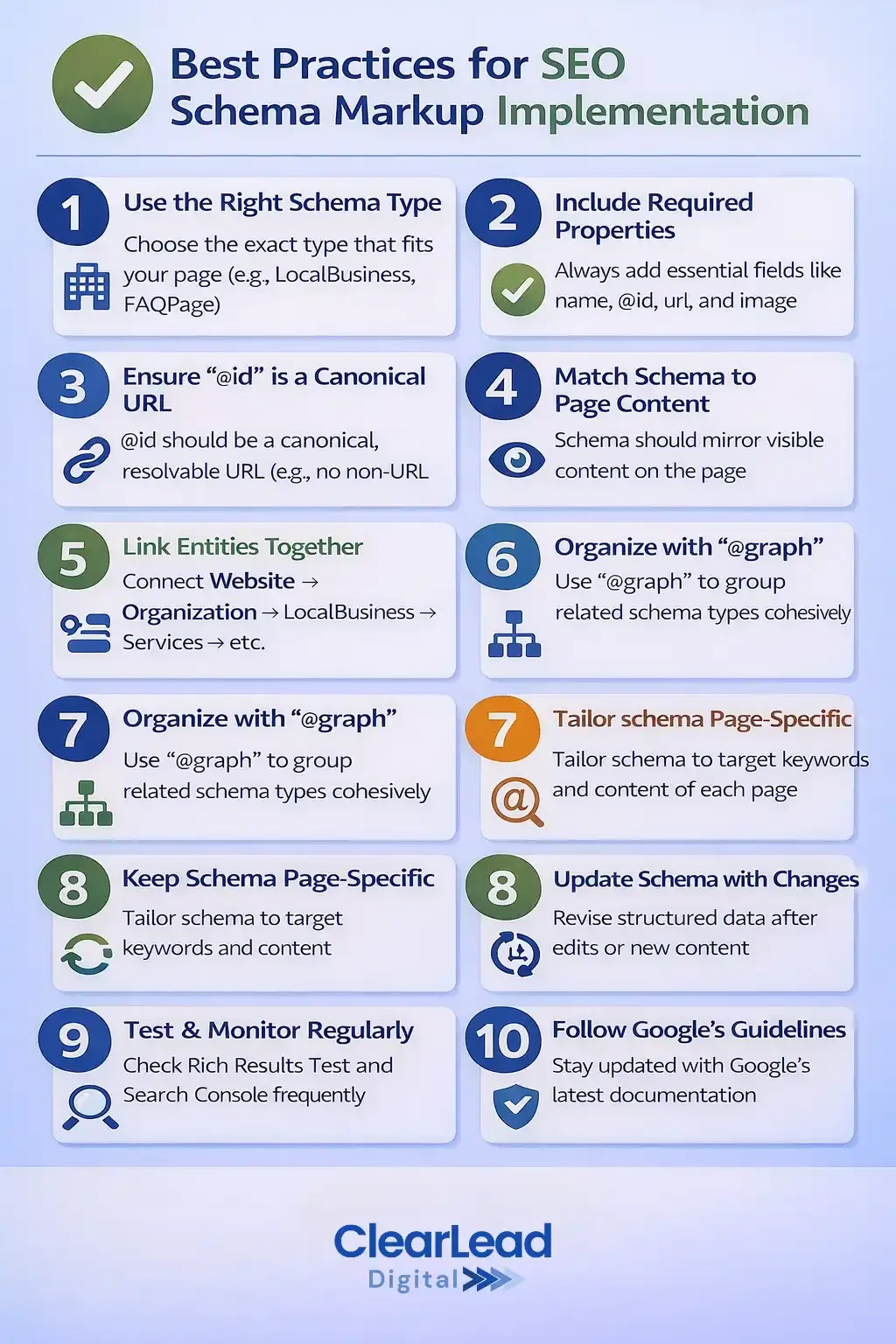
Next, opt for JSON-LD format as recommended by Google. It's easier to read and implement without altering existing HTML tags. Consistency across pages is crucial for structured data implementation. Use the same format and similar schemas where applicable.
Testing your markup is vital to ensure functionality. Google’s Structured Data Testing Tool is invaluable for identifying errors. Regular updates maintain relevance as search engine guidelines evolve.
Key practices include:
Use Approved Vocabulary: Follow Schema.org guidelines.
Opt for JSON-LD Format: It's simple and efficient.
Consistency: Apply uniform schemas across similar pages.
Regular Testing: Validate using testing tools to catch errors.
By following these practices, your site's structured data will be both effective and future-proof.
Common Mistakes and How to Avoid Them
Mistakes in schema markup can hinder your site's SEO. Incorrect use of schema types is a common error. Using the wrong type can confuse search engines and affect how your content displays.
Failing to test your markup is another frequent mistake. Unchecked errors can prevent structured data from being recognized. Regular validation is key to avoiding this issue.
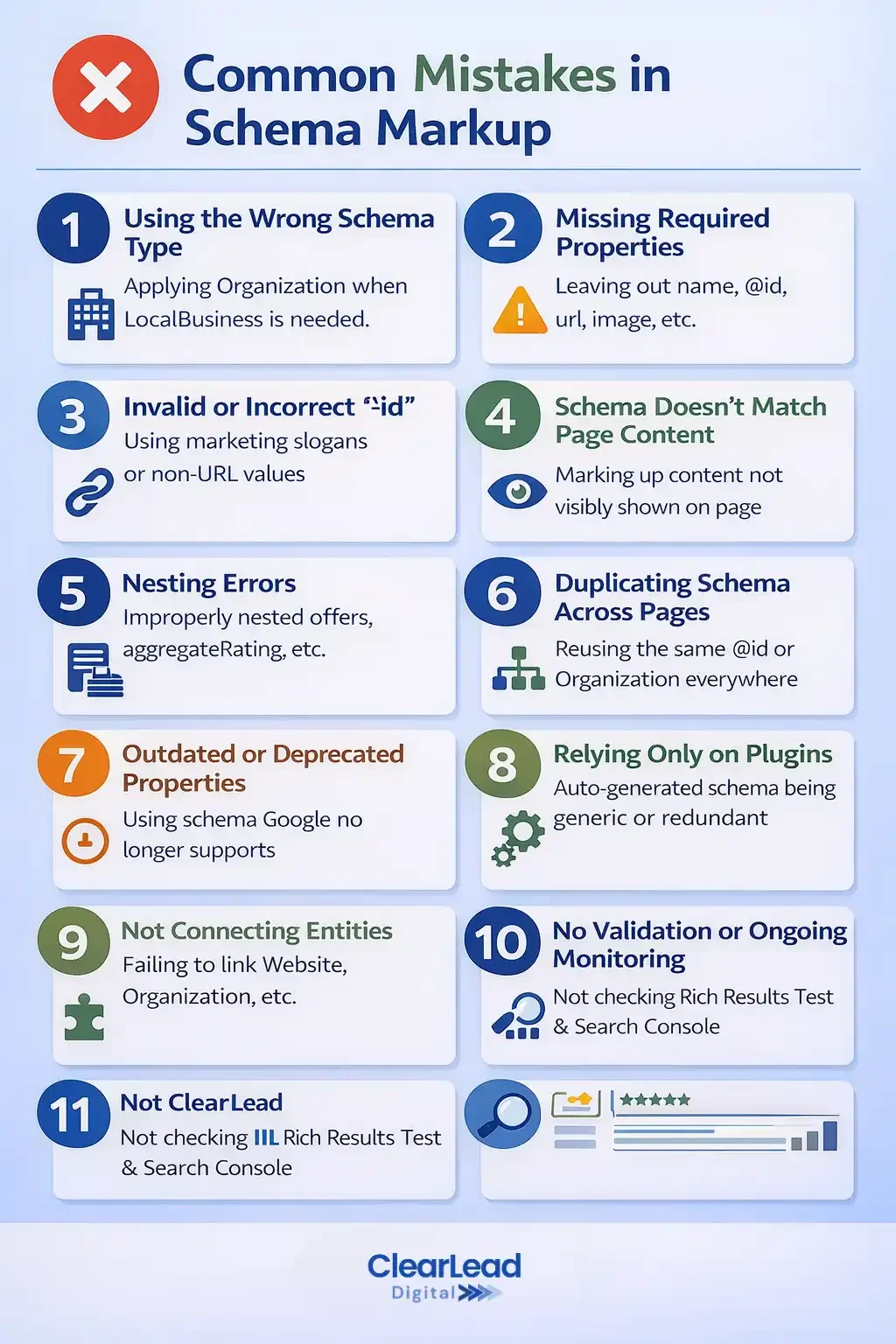
Overlooking updates to schema guidelines can also cause problems. Search engines update their guidelines regularly, and staying informed is essential.
To avoid these pitfalls:
Choose Correct Schema Types: Match schemas to your content.
Conduct Regular Testing: Use tools to detect and fix issues.
Stay Updated: Follow the latest guidelines and practices.
Future Trends in Schema Markup and Structured Data
Schema markup continues to evolve rapidly. AI and machine learning are integrating more closely with structured data. This trend is set to impact how content is indexed and displayed.
There is a growing focus on richer search experiences. Search engines aim to provide more interactive and personalized results. Schema markup will be central to these efforts.
Expect more attention on voice search optimization. As voice search usage increases, structured data will play a vital role in delivering accurate results. These trends highlight the importance of staying updated with schema developments.
Key trends include:
Integration with AI: More dynamic use of structured data.
Enhanced Search Experiences: Focus on interactivity and personalization.
Voice Search Optimization: Adapting to increasing voice search demands.
Conclusion and Next Steps
Understanding schema markup is crucial for any website looking to improve its online presence. By implementing structured data, you can make your site more accessible to search engines. This can lead to enhanced visibility and user engagement.
Start by assessing your website’s current use of schema markup. Tools like Google's Structured Data Testing Tool can help identify areas for improvement. Consider your site's specific needs and choose the right type of schema.
Keep abreast of changes in schema markup trends and best practices. Regular updates will ensure your website remains competitive in search engine results. Implementing these next steps will put you on the path to SEO success.
Frequently Asked Questions About Schema Markup
-
Schema markup is a type of structured data added to a website’s code that helps search engines better understand the content and context of a page. It can enhance search listings with rich results such as ratings, prices, and event details.
-
Schema markup is not a direct ranking factor, but it can improve visibility and click-through rates by enabling rich results and helping search engines interpret content more accurately.
-
JSON-LD is the recommended format because it is easy to implement, does not interfere with HTML structure, and is preferred by Google.
-
Rich snippets are enhanced search results that display extra information like star ratings, prices, event dates, or FAQs when schema markup is properly implemented.
-
You can test schema markup using Google’s Rich Results Test or Structured Data Testing Tool to ensure it is valid and eligible for enhanced search features.
-
Yes. LocalBusiness schema helps search engines understand business details such as location, hours, and contact information, improving visibility in local search results and map listings.
-
Schema markup should be reviewed and updated whenever page content changes or when search engines update structured data guidelines.
-
Yes. Structured data helps search engines deliver clear, concise answers for voice search queries, increasing the likelihood that your content is selected for voice results.
ClearLead Digital Are Schema Specialists - Let us Help!