The Ultimate Guide to Social Media Management and SEO
Table of Contents
Introduction to Social Media Management and SEO
In today's digital age, social media management and SEO are vital for business success. They help build a strong online presence.
Understanding these tools can unlock new opportunities. They drive traffic and enhance brand visibility. Social media management involves creating engaging content. It resonates with your audience and fosters community.
SEO, on the other hand, optimizes your content for search engines. This increases your website's visibility. Integrating both strategies can maximize your marketing efforts. It ensures a cohesive online strategy.
This guide will explore effective social media marketing and SEO techniques. You'll learn how to manage crises and leverage inbound marketing. Discover the benefits of managed SEO and social media marketing services. They can save time and improve results.
Join us as we delve into the world of social media management and SEO. Unlock your business's potential today.
Understanding the Basics
Social media management and SEO are key components of digital marketing. They each play a distinct role in driving growth.
To start, it's essential to understand what social media management entails. It's not just about posting updates and responding to comments.
Instead, it involves crafting strategic content plans, engaging users, and analyzing performance metrics. These efforts build a loyal community.
SEO is equally important. It's about optimizing your online presence to rank higher in search engine results. This brings more eyes to your content.
When SEO is done right, it enhances visibility. It aligns your site's content with what users search for.
For a property management company specifically, that visibility work is best approached as a full property management SEO program — social content supports it, but rankings and owner-intent search still do the heaviest lifting on leads.
Here are some fundamental elements of both disciplines:
Content Creation: Focus on relevant, high-quality content for both social platforms and search engines.
Engagement: Interact with followers and encourage feedback to boost brand perception.
Analytics: Use data to inform decisions, refine strategies, and measure success.
By mastering these basics, you'll lay a strong foundation for digital success.
What is Social Media Management?
Social media management is more than posting updates. It's a strategic effort to build and nurture an online community.
Effective management involves crafting a content plan aligned with business goals. It requires constant engagement and performance monitoring.
In social media management, key tasks include:
Content Planning: Develop a calendar to ensure consistent posting.
Community Engagement: Respond to comments and messages promptly.
Performance Analysis: Use analytics to refine strategies.
These practices ensure a brand remains relevant and resonates with its audience.
What is SEO?
SEO stands for search engine optimization. It's a method to increase website visibility on search engines.
Proper SEO enhances your site's rankings. This brings more organic traffic and potential customers.
Key components of SEO include:
Keyword Research: Identify terms users search for.
On-Page Optimization: Use keywords effectively in titles, headings, and content.
Link Building: Acquire quality backlinks to boost authority.
Mastering SEO can lead to a significant online advantage. It helps align your content with search intent.
For property management companies specifically, our property management SEO blueprint turns keyword research, on-page optimization, and link building into a prioritized plan based on owner and tenant search behavior.
The Importance of Integrating SEO with Social Media Management
Integrating SEO with social media amplifies marketing efforts. It creates a unified strategy that boosts reach and engagement.
Together, these disciplines reinforce each other. Social media can drive traffic to SEO-optimized pages, increasing visibility.
Key benefits of integration include:
Enhanced Engagement: Social platforms can attract more site visitors, improving SEO metrics.
Consistency in Branding: Unified strategies ensure cohesive messaging across all channels.
Increased Reach: Using SEO-driven keywords in social posts can improve search rankings.
Combining SEO and social media management fosters an effective digital marketing strategy. This collaboration unlocks new growth opportunities.
Social Media Crisis Management
In the digital age, brands can face unexpected challenges on social media. A swift and organized response is crucial. Social media crisis management involves identifying, addressing, and mitigating issues that could harm a brand’s reputation.
A crisis can emerge from various sources, such as negative reviews or viral misinformation. These incidents, if not managed well, can escalate quickly, causing significant damage.
To handle a crisis, a clear plan should be in place. This plan should outline roles and responsibilities for team members. Timely communication is vital in stopping further damage.
Staying proactive can help in swiftly diffusing potential threats. It involves monitoring social conversations and acknowledging issues promptly. Engaging directly with your audience to show them you care can boost brand trust.
Here’s what effective crisis management includes:
Monitoring Tools: Use listening tools to detect negative mentions early.
Communication Plans: Establish clear internal and external communication procedures.
Designated Spokespeople: Identify individuals responsible for responding publicly.
With a solid crisis management strategy, brands can not only weather storms but also strengthen their reputation.
Identifying Potential Crises
Potential crises often show early warning signs. Recognizing these signs can prevent issues from spiraling out of control. Social media monitoring tools can help.
Brands must stay vigilant and identify patterns in mentions or comments. Here are some common indicators:
Sudden Spike in Negative Mentions: An increase in complaints can signal a brewing crisis.
Viral Content: Posts gaining sudden traction may harm the brand’s image.
Hashtags: New hashtags associated with your brand could signal emerging issues.
By promptly identifying these, brands can act quickly to mitigate potential damage.
Strategies for Effective Crisis Management
Managing a crisis requires a clear, thoughtful approach. A key strategy is swift and genuine communication.
Addressing the issue head-on is essential. Apologize if needed and provide solutions to the affected parties. Transparency goes a long way in maintaining customer trust.
Practical steps include:
Acknowledge the Issue: Be honest about what occurred.
Respond Promptly: The faster the response, the lesser the damage.
Provide Updates: Keep your audience informed about corrective actions.
Follow up post-crisis to ensure issues are resolved and assess any remaining impacts.
Case Studies of Successful Crisis Management on Social Media
Examining past crises can provide valuable lessons. For instance, when a famous fast-food chain faced a supply issue, their humorous and open approach won back customer support.
Another example is a tech company's recall announcement, handled with transparency and efficiency, which minimized negative impacts.
In both cases, clear communication and swift action were key. By focusing on solutions and maintaining open dialogue, these brands preserved trust and reputation.
Effective Social Media Marketing Strategies
Social media marketing is essential for reaching and engaging your audience. A strategic approach helps maximize your efforts. This involves understanding platform-specific nuances and crafting content accordingly.
To begin, it's crucial to set clear goals. These goals should align with your overall business objectives. Identifying your target audience is the next step, allowing you to tailor content to their interests and behaviors.
Effective strategies include diverse content, such as videos, images, and stories. Consistency is key; maintaining a regular posting schedule helps keep your brand top-of-mind. Platforms like Instagram and Facebook have unique features to explore, such as Stories or Reels.
Here's a list of components for impactful social media strategies:
Diverse Content Types: Use different formats to engage various audience segments.
Regular Analysis: Measure performance with analytics to refine strategies.
Engagement Tactics: Actively interact with your audience to build relationships.
By using these elements, brands can build a strong social media marketing strategy. This strategy will connect with audiences and meet business goals.
Content Planning and Scheduling
Content planning ensures a steady flow of relevant posts. It helps maintain brand consistency, saving time and resources in the long run. Successful content planning involves several key steps.
First, outline your themes and topics based on audience preferences. Use a content calendar to organize and schedule posts in advance. This ensures regular updates without the last-minute scramble.
Consider these tips for effective planning:
Identify Key Dates: Plan posts around holidays and events relevant to your brand.
Set a Schedule: Determine posting frequency for each platform.
Monitor Performance: Adjust future content based on engagement metrics.
With a structured content plan, brands can ensure that their social media presence is consistent, timely, and engaging.
Engaging with Your Audience
Engaging directly with your audience fosters community and trust. It involves more than just posting; it’s about conversation. Social media provides an opportunity to build meaningful relationships with followers.
Responding to comments and messages shows customers they are valued. Personal interactions can humanize your brand, helping to foster loyalty.
Consider these engagement strategies:
Ask Questions: Encourage interaction by prompting discussions.
Host Q&A Sessions: Regularly invite followers to submit questions.
Acknowledge Feedback: Show appreciation for positive comments and address negative ones gracefully.
By actively engaging, brands can convert followers into brand ambassadors who help spread the word.
Utilizing User-Generated Content
User-generated content (UGC) is a powerful tool for brands. It includes content created by customers, showcasing their experiences with your products or services. UGC builds trust by offering authentic insights into your brand from real users.
Encouraging customers to share their stories widens your content pool and taps into their networks. UGC can serve as social proof, boosting brand credibility.
To utilize UGC effectively, consider these approaches:
Create a Hashtag: Encourage users to tag content for easy discovery.
Feature UGC on Official Channels: Showcase user content to build community.
Incentivize Participation: Offer rewards or recognition for contributions.
Harnessing UGC not only diversifies your content but also strengthens relationships with your audience through authentic engagement.
SEO and Social Media Management
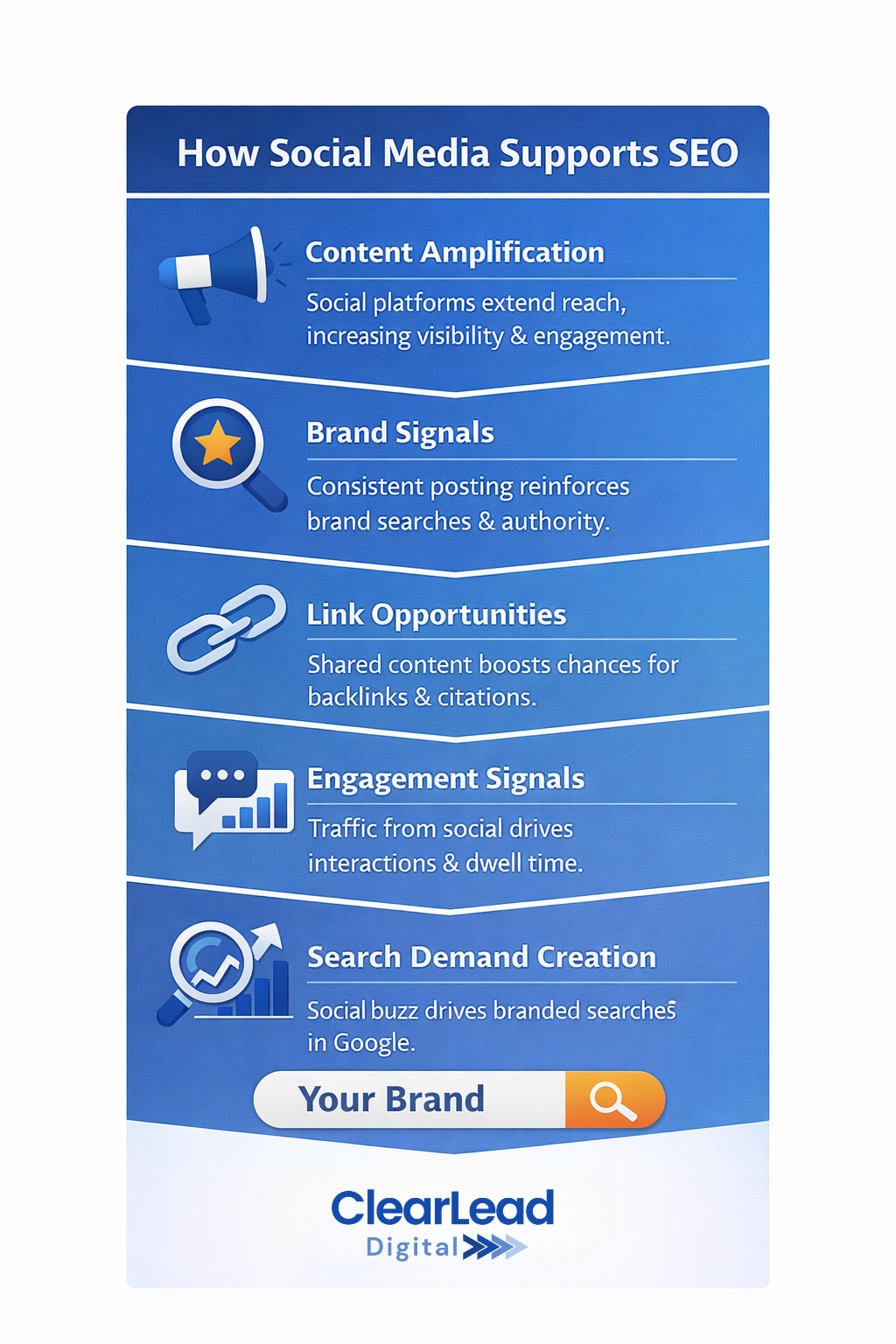
Integrating SEO with social media management can enhance your brand's online presence. While these strategies have distinct roles, their synergy can be powerful. SEO focuses on increasing your website's visibility. Meanwhile, social media amplifies brand reach and engagement.
Together, they drive traffic and boost search rankings. Social media platforms can serve as extensions of your website, delivering SEO-optimized content. This cross-promotion can lead to a broader audience and improved search engine results.
One effective approach is using social media to promote SEO content. Sharing blog posts or articles can increase backlinks and credibility. Social media also allows for real-time engagement and content shares, both of which can enhance your SEO results.
Here are ways to optimize the integration:
Content Sharing: Use platforms to distribute SEO-rich blog posts.
Link Building: Encourage followers to share your content to boost SEO through backlinks.
Real-Time Interactions: Engage with users to increase site traffic.
In conclusion, aligning social media with SEO strategies creates a dynamic interaction that can significantly improve your digital marketing performance.
How SEO Impacts Social Media Visibility
SEO plays a crucial role in boosting social media visibility. With strategic SEO tactics, social profiles can reach more people. While social media content isn't directly indexed by search engines, visibility can still be improved.
Links shared across social platforms increase content exposure. High engagement leads to more followers and, indirectly, more website visits. Social media profiles with consistent branding and keywords can also contribute to higher search rankings.
Consider these points for leveraging SEO for social visibility:
Consistent Branding: Maintain uniformity across profiles to enhance recognition.
Optimize Bio and Descriptions: Include keywords and links to your site.
Promote SEO Content: Share optimized content to expand reach.
These tactics help build a cohesive presence that supports both SEO and social media objectives.
Leveraging Keywords for Social Posts
Using keywords strategically in social media posts can increase reach and engagement. Keywords help people discover your content when searching on platforms. They also contribute to creating content that resonates with your target audience.
Start by researching relevant keywords. These should align with your brand and audience interests. Incorporate them naturally into your posts’ captions and descriptions. Avoid keyword stuffing, which can seem insincere or spammy.
Effective keyword practices include:
Research Trends: Identify popular terms in your industry.
Use Hashtags: Incorporate hashtags to categorize content and improve discoverability.
Monitor Performance: Track which keywords drive engagement and refine your strategy.
By integrating keywords effectively, social posts become more discoverable and impactful.
Best Practices for Optimizing Social Profiles
Optimizing social media profiles can make your brand more appealing and searchable. Well-optimized profiles improve credibility and attract your ideal audience. They should reflect your brand's personality and values, acting as an extension of your website.
Start by ensuring complete profile information. Use high-quality images and concise, engaging descriptions. Include links to your website and other social media channels to facilitate easy navigation for users.
Consider these tips for profile optimization:
High-Quality Visuals: Use clear, branded imagery for profile and cover photos.
Consistent Voice: Maintain a tone that aligns with brand values across platforms.
Strategic Links: Include important links to drive traffic to key pages.
Following these best practices helps create a professional and trustworthy online presence that enhances interaction and discoverability.
Inbound Marketing and Social Media
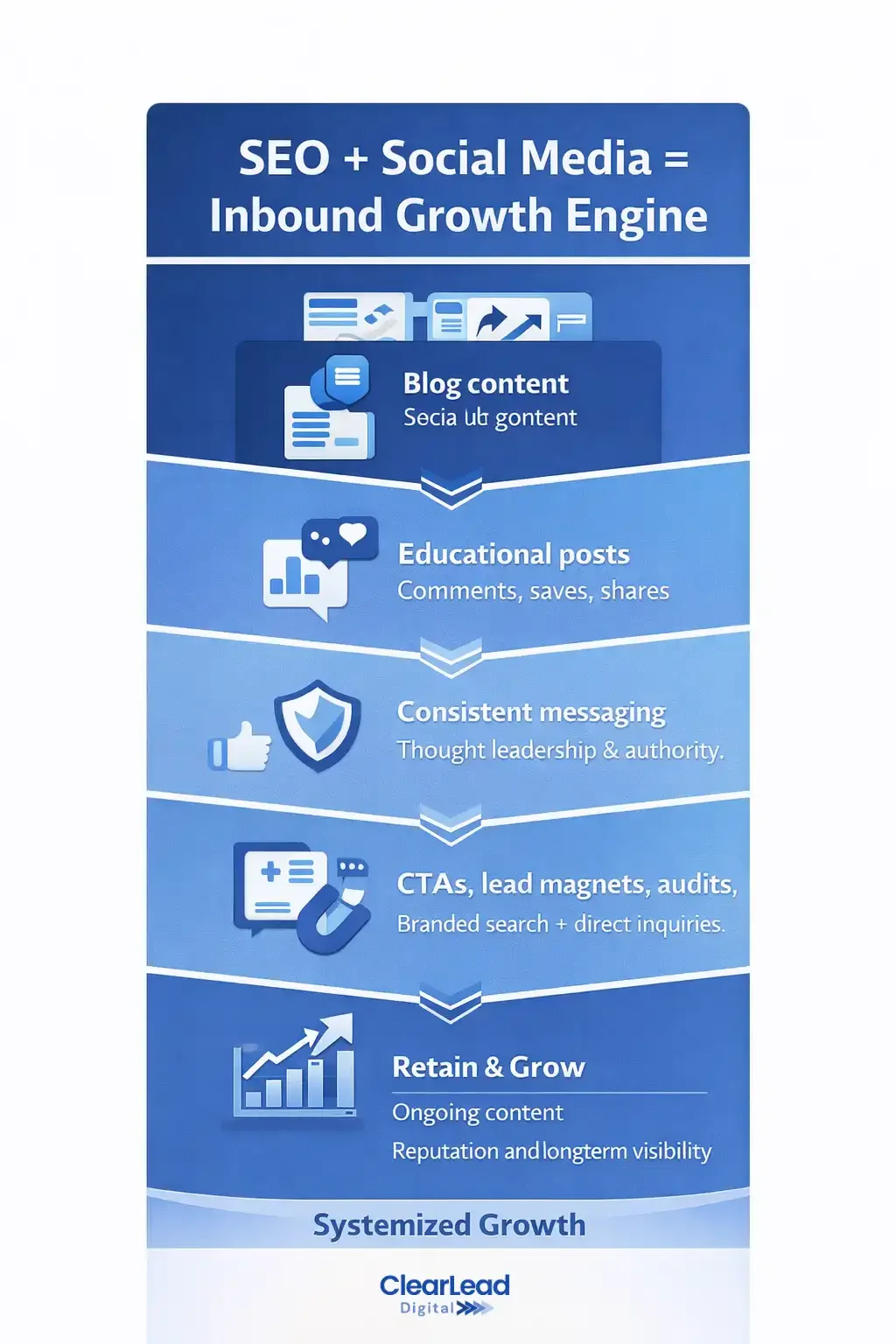
Inbound marketing complements social media by focusing on attracting and engaging audiences. At its core, inbound marketing is about delivering valuable content that addresses the needs and interests of your audience. Social media platforms are ideal channels for distributing this content and fostering community.
The power of inbound marketing lies in creating meaningful interactions. On social media, this means engaging through content that provides value rather than interrupting the user's experience. It involves sharing blog posts, infographics, and videos tailored to the audience.
This method builds trust and positions your brand as an authority in your industry. By doing so, you naturally draw more followers who are interested in your solutions. Social media enhances inbound strategies by providing immediate feedback and insights from your audience.
Consider these inbound marketing facets on social media:
Engaging Content: Share materials that solve problems for your audience.
Audience Insights: Use social feedback to refine your strategies.
Community Building: Foster a sense of belonging around your brand.
When social media is utilized effectively in inbound marketing, it strengthens relationships and generates quality leads. This supports long-term growth.
The Role of Inbound Marketing in Social Media Strategy
Inbound marketing is crucial to social media strategy. It emphasizes helpful content, making it fit seamlessly with social channels. Instead of interruptive ads, focus on engaging followers with valuable resources.
This approach turns casual browsers into loyal customers. By continuously offering insights and solutions, you build authority and trust. Social media serves as an excellent platform to nurture these relationships in a more interactive manner.
Key inbound tactics include:
Educational Posts: Share tips, how-tos, and guides.
Audience-focused Content: Tailor messages to match followers' interests.
Feedback Engagement: Encourage and respond to comments to enhance community ties.
These elements help create a network of satisfied customers eager to engage with your brand.
Creating Valuable Content to Attract Audiences
Creating valuable content is central to attracting an audience on social media. Content should address the needs and questions of your target audience. It should be informative, entertaining, or inspiring, reflecting your brand values.
Identify the topics that interest your followers. Use social media analytics to guide content creation. Always aim for a mix of formats like articles, videos, or infographics to keep content fresh.
Here are steps to creating valuable content:
Research Needs: Understand your audience's pain points.
Diversify Formats: Use various media to capture different preferences.
Prioritize Quality: Ensure each piece of content is well-researched and presented.
By focusing on quality and relevance, your content will naturally draw attention and engagement, expanding your reach.
Measuring Success through Analytics
Analytics are vital for measuring the success of social media and inbound marketing efforts. They provide insights into what content resonates and how it's consumed. Data-driven decisions can significantly enhance your strategy's effectiveness.
Tracking metrics like engagement rates, shares, and follower growth aids in assessing content performance. These analytics pinpoint trends and highlight areas for improvement. Regular analysis ensures your strategy adapts to changing audience preferences.
Key metrics to monitor include:
Engagement: Track likes, comments, and shares to gauge content impact.
Reach: Measure how far your content spreads across platforms.
Follower Growth: Monitor increases in followers to evaluate brand expansion.
Using these analytics supports continuous optimization of your social media strategy, leading to sustained success.
Managed SEO and Social Media Marketing Services
Managed SEO and social media marketing services offer a streamlined solution for businesses looking to enhance their online presence. These services involve outsourcing digital marketing tasks to experts who specialize in SEO and social media strategies. This approach allows companies to focus on core business activities while professionals handle their digital growth.
The primary goal of managed services is to deliver consistent and measurable results. By leveraging industry expertise, businesses can achieve higher search rankings, increased social media engagement, and improved brand visibility. With the right partner, strategies are tailored to align with specific business objectives.
Managed services provide a comprehensive package that can include keyword research, content creation, and campaign management. These services often offer ongoing optimization to ensure strategies adapt to industry trends and changing algorithms. This continuous improvement ensures long-term success in a competitive digital landscape.
Consider these benefits of managed services:
Expertise Access: Gain insights from experienced professionals.
Time Efficiency: Save time for core business tasks.
Measurable Results: Achieve and monitor objectives effectively.
Managed services also offer flexibility in terms of scalability. Businesses can adjust services according to growth and changing needs. This adaptability ensures marketing efforts remain aligned with business dynamics.
Benefits of Hiring Managed Services
Hiring managed SEO and social media marketing services offers several benefits. It allows businesses to leverage professional skills and stay ahead in the digital space. The expertise provided by these services ensures strategies that are both current and effective.
Key benefits include:
Specialized Knowledge: Access to industry specialists enhances strategy quality.
Cost-Effectiveness: Reduces the need for in-house resources.
Strategic Focus: Allows internal focus on core competencies and business growth.
These advantages make managed services a valuable investment for businesses aiming for significant digital advancement.
How to Choose the Right Provider
Choosing the right provider for managed SEO and social media services is crucial. It's important to assess their experience, capabilities, and alignment with your business goals. A strong partnership will significantly impact your digital success.
Consider these factors:
Proven Track Record: Review past successes and client testimonials.
Custom Solutions: Look for tailored strategies to fit your business needs.
Comprehensive Services: Ensure the provider offers end-to-end solutions that align with your objectives.
A thorough evaluation helps find a provider that delivers value and supports long-term business growth.
Examples of Successful Managed Services Campaigns
Several businesses have thrived by leveraging managed SEO and social media services. For instance, a tech startup saw a 200% increase in website traffic through targeted SEO campaigns. Meanwhile, a retail brand boosted its social media engagement by 150% with expert-managed strategies.
Such campaigns demonstrate the impact of managed services. By prioritizing expert insights and strategic planning, businesses achieve measurable success. They highlight the potential of managed services to transform digital presence and drive business objectives.
Conclusion
Social media management and SEO are indispensable for modern business success. They work together to enhance online visibility and engage audiences. By integrating them, businesses can achieve a broader reach and deeper engagement.
The strategies discussed in this guide provide a roadmap to effectively manage digital presence. From crisis management to leveraging managed services, these tactics help navigate the complexities of digital marketing. Consistent application leads to sustainable growth.
Incorporating these practices will position businesses to thrive in an ever-evolving digital landscape. Success comes from strategic implementation and continuous adaptation.
Build a Smarter Social Strategy with ClearLead Digital
Move beyond posting for likes. Create a system tied to real business growth.
Summary: This guide explores the strategic intersection of social media management and SEO, explaining how the two disciplines work together to drive visibility, trust, and long-term growth. It covers foundational concepts, the benefits of an integrated approach, and practical applications—from inbound marketing and content distribution to crisis management and performance optimization. The guide also outlines how managed SEO and social media services create consistency, scalability, and measurable ROI. The conclusion emphasizes building a cohesive digital presence that supports both brand authority and lead generation, followed by FAQs addressing common questions and misconceptions.
Frequently Asked Questions (FAQs)
-
Social media management is about creating, sharing, and interacting with content on social platforms. SEO, on the other hand, aims to improve website content so it ranks higher in search engine results. Together, they increase visibility, traffic, and brand authority.
-
Social media does not directly change search engine rankings. However, it helps SEO in other ways. It increases content visibility, drives traffic, encourages backlinks, and strengthens brand signals.
-
Integrating SEO with social media creates a cohesive digital strategy. SEO-optimized content shared on social platforms reaches wider audiences, improves engagement metrics, and supports long-term organic growth.
-
Posting frequency depends on the platform and audience, but consistency matters more than volume. Most businesses see results posting 3–5 times per week with high-quality, relevant content.
-
Social media crisis management is the process of identifying, responding to, and resolving negative situations online—such as complaints, misinformation, or viral backlash—to protect a brand’s reputation.
-
Preparation includes monitoring brand mentions, creating a response plan, assigning a spokesperson, and establishing clear communication guidelines to ensure fast, transparent responses.
-
Inbound marketing focuses on attracting customers through valuable, relevant content rather than direct advertising. Social media supports inbound marketing by distributing content, engaging audiences, and nurturing trust.
-
Key metrics include website traffic, engagement rates, follower growth, keyword rankings, conversions, and content performance. Analytics help refine strategies and measure ROI.
-
Managed services involve outsourcing SEO and social media strategy, execution, and optimization to professionals. These services provide expertise, consistency, and measurable performance improvements.
-
Managed services save time, reduce internal workload, provide access to specialized expertise, and deliver scalable strategies aligned with business growth goals.
Connect with ClearLead Digital