Best Property Management Software 2026: Honest Reviews
Last Updated: September 12, 2026
Most property management companies don’t start shopping for new software because they want something new. They do it because what they’re using no longer works.
At around 100 units, small cracks show up. At 300 units, reporting becomes slow and stressful. By the time a company reaches 500 or more doors, maintenance coordination, accounting accuracy, and owner communication all start competing for attention. Spreadsheets and disconnected tools simply cannot keep up.
This guide looks at the best property management software in 2026 for companies managing 100 to 1,000 plus units, including AppFolio, Buildium, RentManager, Rentvine, DoorLoop, Yardi Breeze, and TurboTenant. It focuses on cloud-based property management software because the industry has shifted toward modern systems. You’ll see how each platform handles accounting, reporting, maintenance, integrations, tenant portals, and pricing at scale, with insights from real property management teams.
Table of Contents
How We Evaluated the Best Property Management Software
The property management software market includes dozens of platforms, each designed for different portfolio sizes, use cases, and budget levels. To build this list, we applied a consistent evaluation framework across all platforms reviewed.
Our evaluation criteria:
1. Feature completeness (30% weight) We assessed whether each platform covers the core workflows property managers need: rent collection and accounting, maintenance request management, tenant and owner portals, lease management, vacancy marketing, and reporting. Platforms with significant gaps in any core area scored lower regardless of their strengths elsewhere.
2. Ease of use and onboarding (20% weight) We considered the learning curve for new users, quality of onboarding resources, and the user interface based on firsthand platform exploration, demo sessions, and aggregated user reviews from G2, Capterra, and GetApp. Software that requires extensive implementation support or technical knowledge to operate scored lower for independent operators and smaller portfolios.
3. Pricing transparency and value (20% weight) We evaluated whether pricing is publicly available, whether the cost structure is predictable, and whether the features included at each tier represent fair value for the target user. Platforms with hidden fees, mandatory setup charges above industry norms, or pricing models that scale punishingly with portfolio size were penalized. Software pricing is only one part of a landlord's total cost picture — understanding property management fees helps owners evaluate the full value equation of professional management.
4. Customer support and reliability (15% weight) Based on user review aggregates and publicly available support documentation, we assessed response time expectations, available support channels (phone, chat, email), and uptime/reliability track records.
5. Integrations and scalability (15% weight) We evaluated the depth of third-party integrations (accounting software, payment processors, marketing platforms), API availability, and whether the platform can realistically grow with a business from small to large portfolio without requiring a full platform switch.
Rating scale: Each platform is scored out of 5.0 across these criteria and given an overall rating. Platforms are listed roughly in order of our recommended use case rather than strict numerical rank — because the "best" platform genuinely depends on portfolio size and operational style.
What's New in Property Management Software for 2026?
As we move further into 2026, the property management tech landscape has heavily shifted toward automation and AI-driven workflows. While foundational features like trust accounting and maintenance ticketing remain critical, the best property management software this year is defined by its ability to completely automate tenant communications, predict maintenance issues before they escalate, and seamlessly integrate with third-party tools via open APIs.
If you are scaling past 200 doors, simply having a static ledger isn't enough anymore. You need a platform that acts as a true growth engine.
The same logic applies on the marketing side — great software keeps operations organized, but it's effective SEO for property management companies that actually fills the pipeline with the owners and leads worth scaling for in the first place.
Below is our updated, comprehensive review of the top platforms currently leading the market.
Best Rated Property Management Software
Property management software is the system companies use to manage accounting, leasing, maintenance, reporting, and communication in one place. For firms operating across multiple properties or offices, it becomes the backbone of daily operations.
Tools that work for small portfolios often fail once teams need shared access, consistent workflows, and reliable reporting. This is why platforms like AppFolio, Buildium, RentManager, and Rentvine are frequently evaluated by companies managing 100 to 500 units with multi-office teams.
Scaling Between 100 and 500 Units
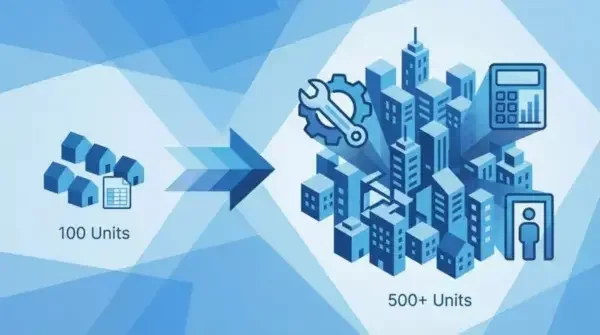
At this stage, companies need software that supports centralized accounting without slowing down leasing, maintenance, or front-line staff. Role-based access, shared dashboards, and standardized reporting become more important than flashy features.
This is also where leadership starts asking tougher questions. What does a 300-unit portfolio really cost to run? Why does owner reporting still take days? Why are maintenance requests hard to track across properties?
The answers usually point back to systems that were never designed to scale.
Metrics, Dashboards, and Reporting That Matter After 200 Units
Leadership teams need fast access to rent collection, delinquency, vacancy, maintenance backlog, and cash flow. Dashboards should surface these metrics without constant exporting.
Modern PM software should deliver customizable owner statements, portfolio-level summaries, and clean exports for accountants. Reporting should support decisions, not just record activity.
Accounting and Trust Accounting at Mid-Market Scale
Accounting becomes a priority once companies manage owner funds across hundreds of units. Mid-sized firms expect separate trust accounts, automated reconciliation, and clean audit trails.
RentManager is often chosen by teams that want maximum accounting control. AppFolio and Buildium appeal to companies that want strong trust accounting without heavy setup. Rentvine is also frequently mentioned by firms that want accounting tightly connected to daily operations.
Automated bank feeds and reconciliation matter more at this size. Manual processes that once felt manageable quickly become risky.
Integrations, Leasing, and Screening at Higher Volume
For companies managing 500 plus apartments, integrations stop being optional. Leasing teams rely on screening, payments, and marketing tools that need to work together without manual exporting.
Most modern platforms support third-party leasing and screening tools, but native integrations usually perform better during high leasing volume. When systems are loosely connected, bottlenecks appear fast.
Maintenance Workflows After 1,000 Doors
At 1,000 units, maintenance becomes a systems problem. Strong platforms route requests automatically, assign vendors based on rules, and give managers visibility into response times and costs.
Companies that rely on email and spreadsheets at this scale often struggle to keep service levels consistent.
Tenant Portals and Self-Service at Scale
For companies serving 500 plus residents, tenant portals reduce inbound calls and emails. Strong portals allow residents to pay rent, submit maintenance requests, track status, and access documents.
Weak portals shift more work back onto staff and show up quickly in Google reviews.
Top 7 Property Management Software Overview
1. AppFolio
Overview
AppFolio is positioned for mid-sized to large residential portfolios and is commonly adopted once companies pass 300 to 400 units.
Key Features
Accounting and owner reporting
Leasing and tenant portals
Maintenance workflows
Pros and Cons
Strong automation
Higher cost at scale
What Property Managers Say (AppFolio Reviews)
“We moved to AppFolio once we crossed about 400 units…”
“The workflows are strong, but you feel the pricing once you grow…”
“Support is solid once you’re live, but onboarding felt rushed…”

2. Buildium
Overview
Buildium is a well-known option for growing residential and mixed portfolios and is often selected as a company’s first full management system.
Key Features
Trust accounting
Owner and tenant portals
Reporting templates
Pros and Cons
Solid accounting base
Feature access tied to pricing tiers
What Property Managers Say: Buildium Reviews
“Buildium gave us structure…”
“Some reports were locked behind higher plans…”
“Easy for new staff to learn…”
3. Yardi Breeze
Overview
Yardi Breeze is commonly viewed as an entry point into the Yardi ecosystem. Yardi is the largest PMS company on this list.
Key Features
Basic accounting
Online payments
Scalable path to Yardi Voyager
Pros and Cons
Affordable entry
Reporting depth is lighter
What Property Managers Say About Yardi Breeze
“It felt like a stepping stone…”
“We started exporting data more than we wanted…”
4. TurboTenant
Overview
TurboTenant is best suited for very small portfolios and hands-on owners.
Key Features
Listings and screening
Basic rent collection
Pros and Cons
Simple setup
Limited for professional management companies
What Property Managers Say About TurboTenant
“TurboTenant worked great when I was managing a handful of units myself. Listings and rent collection were easy to set up.”
“Once we started adding more properties, it felt limiting. Reporting just wasn’t there for a growing operation.”
“It’s a good starter tool, but not something I’d run a management company on.”
Common Sentiment
TurboTenant is popular with very small portfolios because it is easy to use, but most professional management companies outgrow it quickly.

5. RentManager
Overview
RentManager is a strong accounting-focused platform for mid-sized firms.
Key Features
Advanced reporting
Custom workflows
On-premise and cloud options
Pros and Cons
Accounting flexibility
Steeper learning curve
What Property Managers Say About RentManager
RentManager is favored by accounting-focused teams that are willing to invest time in setup in exchange for long-term control and accuracy.

6. Rentvine
Overview
Rentvine is often chosen by mid-sized residential property management companies that want strong accounting tied closely to daily operations.
Key Features
Full trust accounting
Maintenance and workflow automation
Owner and tenant portals
Pros and Cons
Strong balance between accounting and usability
Smaller ecosystem than larger platforms
What Property Managers Say About Rentvine
“Rentvine felt like it was built for companies our size. Accounting and operations actually work together.”
“We wanted something stronger than entry-level software but less rigid than enterprise systems. Rentvine hit that middle.”
“Owner reporting made more sense without needing custom reports.”
Common sentiment
Rentvine is often chosen by growing mid-sized firms that want strong accounting and operations without the weight of enterprise systems.
7. DoorLoop

Overview
DoorLoop is a cloud-based platform often considered by companies that want a modern interface and straightforward setup with real accounting features.
Key Features
Full accounting with bank syncing
Trust accounting
Leasing and maintenance workflows
QuickBooks Online integration
Pros and Cons
Fast setup and adoption
Pricing clarity varies by plan
What Property Managers Say About DoorLoop
“DoorLoop was much easier for our team to learn compared to other platforms we tested.”
“The accounting was more capable than we expected. Trust accounting and bank syncing worked well for our portfolio.”
“Support was responsive during setup. We didn’t feel abandoned after signing.”
“Reporting works for most owner needs, but very custom reports still require exports.”
Common Sentiment
DoorLoop is commonly viewed as a clean, easy-to-adopt platform that meets mid-sized accounting needs without adding unnecessary complexity.
Cloud-Based vs Locally Installed Software
Cloud-based systems are preferred by most growing firms because they allow remote access, faster updates, and easier collaboration. On-premise systems still appeal to accounting-heavy teams but require internal IT support.
Best Options by Need
Firms under 200 units favor cloud simplicity
Firms managing 300–1,000 units benefit from cloud collaboration
Multi-state operators usually avoid on-premise systems
Integrations and Compatibility
Integrating With QuickBooks
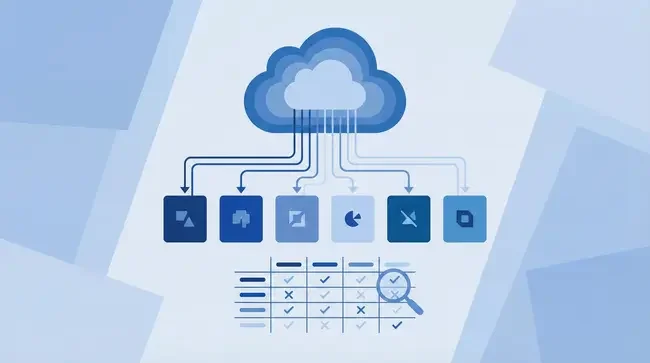
Some platforms support direct sync, while others replace the need for QuickBooks. Common limits include delayed syncing and restricted data fields.
Third-Party Leasing and Screening Tools
Most mid-market platforms integrate with screening providers, CRM tools, and marketing platforms, though native integrations usually perform better at scale.
Property Management Software Comparison: 2026
Which Property Management Software Is Right for You?
The "best" property management software depends entirely on your portfolio size, operational model, and budget. Here's a quick decision framework:
If you're an independent landlord with fewer than 10 units: → Start with TurboTenant (free plan) or Landlord Studio (free tier). Both handle the core workflows without a monthly commitment. You can always migrate to a more full-featured platform as your portfolio grows.
If you're a growing property manager with 10–150 units: → Buildium and DoorLoop are the two most commonly recommended platforms at this stage. Buildium has a longer track record and deeper accounting; DoorLoop has a more modern interface and is often faster to learn. Both offer free trials — worth running a 2-week comparison.
If you're running a professional property management company with 150–500+ units: → AppFolio or Rent Manager are the industry standards. AppFolio's automation and reporting depth is unmatched for companies managing at scale. Rent Manager is preferred by companies with complex or mixed portfolios (residential + commercial + HOA).
If you manage primarily single-family rentals at scale: → Propertyware (owned by RealPage) was built specifically for single-family portfolio management and remains one of the best-suited platforms for this use case at 500+ doors.
If budget is the primary constraint: → TurboTenant's free plan and Yardi Breeze's low per-unit cost are the best starting points. Both scale reasonably well and can handle professional management workflows.
Final Thoughts About Residential PM Software Reviews
The right property management system is less about brand and more about where the company is headed. Teams that choose systems based on how they expect to operate two years from now avoid painful migrations later.
Growth exposes weak systems quickly. The right platform supports it quietly in the background.
Frequently Asked Questions (FAQs)
-
AppFolio, Buildium, RentManager, Rentvine, DoorLoop, Yardi Breeze, and TurboTenant. It really depends on your needs as a company and what your growth goals are.
-
In our opinion, for residential property managers that focus on single family residential property management and have sizable portfolios, Appfolio is the highest rated property management software.
-
CRM for managing tenant leads, accounting, tenant screening, maintenance, communication management tools and tracking, advanced reporting and more.
-
In Single Family Residential Property Management, Appfolio and Rentvine are the top contenders. Appfolio is an all in one solution. Rentvine is as well, but Rentvine is known for its open API making it fully customizable to your needs.
-
The best property management software in 2026 depends on your portfolio size and operational model. For large professional management companies (200+ units), AppFolio and Rent Manager are the industry leaders. For growing portfolios in the 50–200 unit range, Buildium and DoorLoop consistently receive the highest user satisfaction scores. For independent landlords managing fewer than 20 units, TurboTenant's free plan and Yardi Breeze's low per-unit cost offer strong value. Our top overall pick for most property management companies is DoorLoop, which balances ease of use, feature depth, and transparent pricing better than any other platform at its price point.
-
AppFolio and Buildium are the two most widely used property management software platforms among professional property management companies in the US. AppFolio dominates the mid-to-large company segment, while Buildium has the largest user base among smaller companies and independent managers. Yardi (across its various products — Yardi Breeze, Yardi Voyager) is the dominant platform at the enterprise level, serving institutional operators and REITs. For independent landlords, TurboTenant has grown rapidly due to its free tier.
-
Yes — TurboTenant and Landlord Studio both offer permanently free plans for independent landlords. TurboTenant's free plan includes tenant screening, rent collection, maintenance requests, and lease management with no per-unit fees (revenue is generated through tenant-paid application fees). Landlord Studio's free plan covers up to 3 properties and includes basic income/expense tracking. For professional property management companies managing larger portfolios, fully free options are limited — most enterprise platforms charge per unit — but several offer free trials or demos.
-
Property management software pricing ranges from free (TurboTenant, Landlord Studio) to over $1,000/month for enterprise platforms. Most mid-market platforms charge on a per-unit basis: AppFolio starts at $1.40/unit/month (minimum $280/month), Yardi Breeze at $1/unit/month ($100 minimum), and Rent Manager at approximately $1/unit/month depending on package. Flat-fee platforms include Buildium (from $58/month for up to 150 units) and DoorLoop (from $69/month for up to 20 units). When comparing costs, factor in onboarding fees, which can range from $0 to $1,000+, and per-transaction fees for ACH payments and credit card processing.