Enhance Your Selling Ability to Instantly Convert More Deals
Last Updated: March 17, 2026

AT A GLANCE
Selling ability is one of the most important skills in today’s competitive market, whether you’re new to sales or an experienced professional. This guide walks you through essential sales skills—from communication and persuasion to objection handling, relationship building, and leveraging technology—to immediately elevate your performance. Learn proven strategies to strengthen your confidence, close more deals, and build long-term customer trust.
In This Guide
- 1. Understanding Sales Skills
- 2. Master the Basics
- 3. Develop Strong Communication Skills
- 4. Focus on Relationship Building
- 5. Enhance Your Persuasion Techniques
- 6. Handling Objections Effectively
- 7. Leverage Sales Training Programs
- 8. Continuous Learning and Improvement
- 9. Use of Technology in Sales
- 10. Create a Personal Action Plan
- FAQ
Selling ability is a crucial skill in today's competitive market. It can make or break your career in sales.
Whether you're a seasoned professional or just starting, enhancing your sales skills is vital.
This guide will provide you with proven strategies to boost your selling ability instantly.
You'll learn how to improve your sales expertise and develop key sales skills.
From mastering basic sales skills to advanced techniques, we've got you covered.
Get ready to transform your sales approach and achieve greater success.
1. Understanding Sales
Sales skills lists are the tools you need to excel in selling. They shape your interactions with customers and influence outcomes. The right skills can elevate your sales performance significantly.
These skills encompass a range of abilities. They include communication, negotiation, and customer relationship management. Mastering these can set you apart from the competition.
Key sales skills of a salesperson are:
What are Sales Person Skills?
Sales skills are specific abilities that help you sell products or services. They include both interpersonal and technical skills necessary for success.
Essential sales skills involve understanding customer needs and communicating effectively. Some key skills salespeople need include:
Emotional Intelligence
Product Knowledge
Problem-Solving
Sales Forecasting
Closing Techniques
Importance of Selling Ability
Selling ability is essential in achieving your sales targets. Learning how to enhance sale skills is an art. It involves both engaging and persuading potential customers.
Improving your selling ability can lead to increased sales and client retention. This enhances your reputation and opens more opportunities for growth.
For property managers, that growth starts with having enough qualified owner leads to work in the first place — which is exactly what a solid property management SEO strategy is built to deliver.
2. Master the Basics Sales Ability
To excel in sales, mastering the basic skills is crucial. These foundational skills lay the groundwork for more advanced techniques. They create a solid base upon which you can build your sales career.
Every salesperson should be proficient in core areas. Time management, for example, helps balance prospecting and closing deals. Product knowledge instills confidence, enabling you to deliver compelling pitches.
Here are some fundamental skills to develop:
Listening Actively
Communicating Clearly
Managing Time Wisely
Understanding the Product
Setting Realistic Goals
By refining these basics, you will be better prepared for complex sales situations. They serve as the building blocks for all future success in selling.
Key Sales Skills for Beginners
Beginners should focus on developing practical skills first. These skills make it easier to interact effectively with customers. Strong foundations pave the way for continuous improvement and success.
Here's where to start:
Build Confidence
Engage Actively
Understand Customer Needs
Each of these skills will help you deliver value to your customers. As you grow more comfortable, you'll notice better interactions and outcomes.
Lead source shapes those interactions more than most reps realize — an owner who found you through SEO for property management companies arrives already researching solutions, so the conversation starts at qualification rather than persuasion.
Sales Skills Examples
Successful salespeople often exhibit a blend of skills. These skills include communication, relationship-building, and problem-solving. Each plays a vital role in the sales process.
For instance, active listening can reveal hidden customer needs, while strong negotiation skills help close deals. Together, these examples illustrate the diverse capabilities that contribute to sales success.
3. Develop Strong Communication Skills
Communication is at the heart of all sales interactions. Strong communication skills enhance customer relationships and clarity. They help convey your message effectively, ensuring the customer understands the value you offer.
Effective communicators can inspire trust and build rapport. They employ both verbal skills and non-verbal cues to influence buyers. This blend creates a powerful tool in convincing and persuading clients.
Consider focusing on the following to enhance your communication:
Clear Speaking
Persuasive Messaging
Using Body Language
Providing Immediate Feedback
Incorporating these elements into your approach will improve your interactions. They transform simple conversations into opportunities for closing deals.
Verbal and Non-Verbal Communication
To engage customers effectively, mastery of both verbal and non-verbal communication is key. Verbal skills convey the message, while non-verbal cues support it.
This holistic approach can include:
Eye Contact
Tone of Voice
Facial Expressions
Combining these methods enhances understanding and trust. They assure the customer of your confidence and commitment.
Active Listening Techniques
Active listening is an indispensable skill in sales. It involves fully concentrating on the speaker, understanding their message, and responding thoughtfully.
To boost your listening skills, stay present during conversations and avoid interruptions. Confirm understanding by rephrasing key points. This practice demonstrates empathy and builds trust, encouraging more fruitful sales discussions.
4. Focus on Relationship Building
Building robust relationships is essential for long-term sales success. Strong relationships lead to trust and repeated business. Prioritize human connections over quick wins for sustainable growth.
Cultivating these connections hinges on genuine interest and empathy. Every interaction should leave the customer feeling valued and understood. This approach fosters customer loyalty and advocacy.
To excel in relationship building, consider focusing on:
Regular Check-ins
Personalized Communication
Problem-Solving
Implementing these practices can transform prospects into loyal customers. Nurture these bonds to create long-term brand ambassadors.
Skills Needed for Sales Success
Achieving sales success involves honing specific skills tailored for building relationships. Master these essential skills to excel in your sales career.
Key skills include:
Emotional Intelligence
Adaptability
Problem-Solving
These skills enhance the sales process by ensuring you're responsive to customer needs. They enable you to build enduring, fruitful relationships.
Customer Relationship Management (CRM) Strategies
Effective CRM strategies are crucial for maintaining organized and productive relationships. Utilize CRM tools to streamline communication, manage leads, and personalize customer experiences.
Organized data and timely follow-ups build trust. This approach ensures no potential lead falls through the cracks. Use your CRM system to track interactions and set reminders, enhancing customer care. This systematic approach benefits both the salesperson and the customer, strengthening loyalty over time.
5. Enhance Your Persuasion Techniques
Persuasion is a key component of a successful sales career. Developing strong persuasion skills can turn leads into loyal customers. Effective persuasion involves understanding customer needs and communicating solutions convincingly.
To bolster your persuasion skills, focus on:
Building Credibility
Presenting Clear Value Propositions
Addressing Customer Concerns
When you effectively persuade, your communication resonates with potential buyers. Tailor your message to highlight benefits that align with customer priorities. This ensures your pitch remains relevant and impactful.
By mastering these techniques, you'll create more compelling narratives. Such narratives foster trust and prompt confident purchasing decisions, enhancing your selling ability.
Salesmanship Skills
Salesmanship extends beyond presenting products. It's an art that blends various skills to persuade effectively. Successful salespeople often possess the following attributes:
Confidence
Enthusiasm
Empathy
These skills enable them to engage prospects and build rapport. In sales, confidence can be contagious, positively influencing the customer's decision. Enthusiasm can effectively highlight product benefits and build excitement, while empathy ensures that the customer's needs are genuinely addressed.
Conversion Rate Optimization Strategies
Conversion rate optimization (CRO) focuses on turning casual interest into confirmed sales. Effective CRO strategies include refining sales tactics to meet customer preferences and improve outcomes.
Key strategies involve personalizing sales presentations to enhance relevance. This approach can significantly increase engagement and conversions. Analyze what works and iterate upon those methods. By continually assessing and adapting strategies, you ensure that every step in your sales funnel supports maximum conversion potential.
6. Handling Objections Effectively
Objections are a natural part of the sales process. Handling them well can transform hesitations into commitments. Effective objection handling ensures you address concerns and build customer trust.
To manage objections, listen intently to the customer's concerns. This helps in providing precise answers and showcasing the value of your offering. The goal is to ensure customers feel heard and understood.
Strategically deal with objections by:
Acknowledging the Objection
Providing Clarifications
Offering Solutions
These approaches not only mitigate objections but also strengthen customer relationships.
Objection Handling Techniques
Tackling objections with finesse requires refined techniques. Being prepared for potential objections equips you to respond calmly and effectively. Some techniques include:
Clarifying concerns through questions
Demonstrating benefits that outweigh drawbacks
By listening to customers and understanding their needs, you can help them with their worries and provide solutions that fit their specific problems.
Turning No into Yes
Changing a "no" to a "yes" isn't about aggressive selling. It's about shifting perspectives. First, understand the root of the objection and tackle it directly. Acknowledge the concern, then demonstrate the genuine value your product or service provides. By framing benefits around the buyer's priorities, your responses resonate more and sway decisions positively.
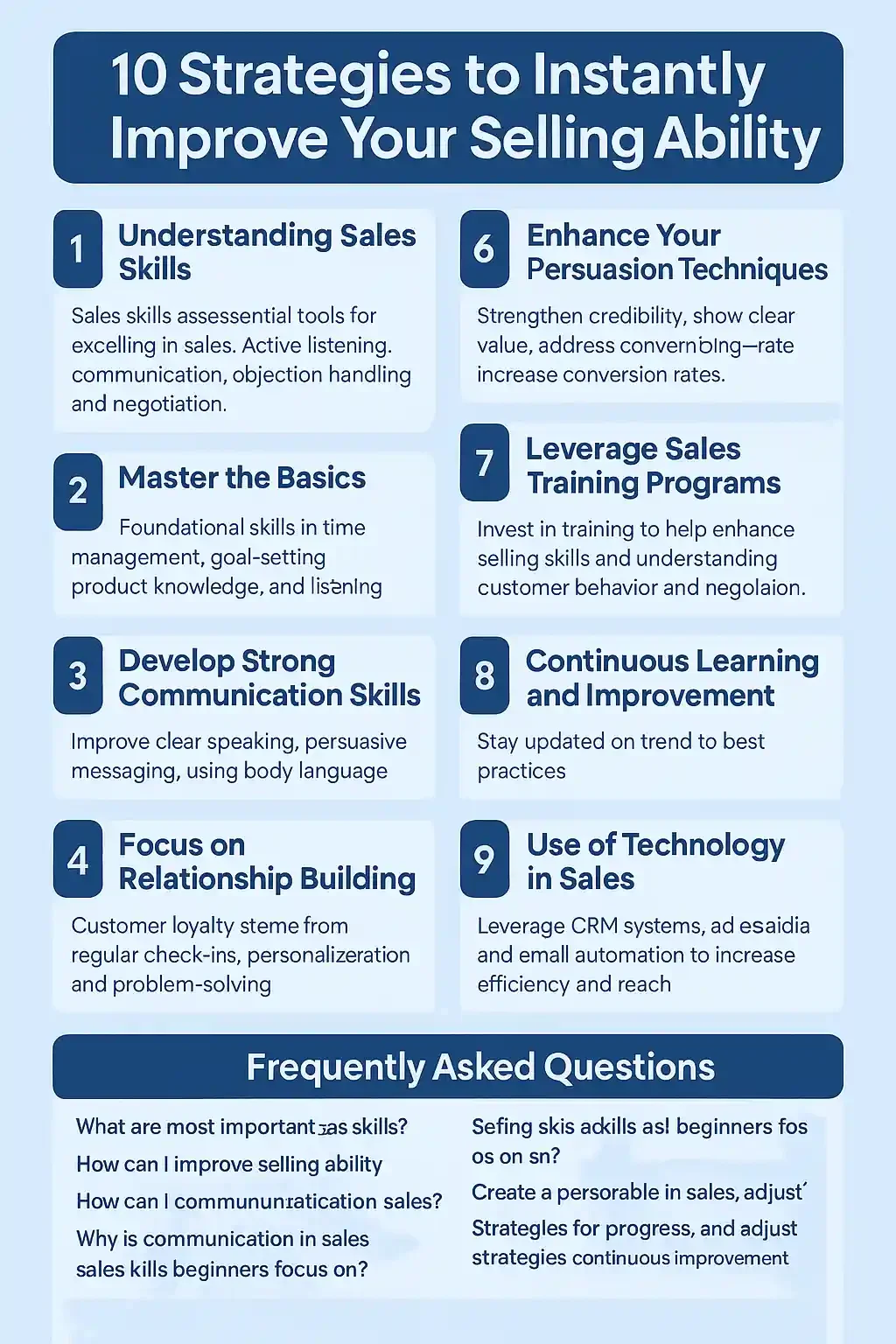
7. Leverage Sales Training Programs
Sales training programs are fundamental to enhancing selling ability. These programs provide structured learning experiences and introduce vital techniques for success. Engaging in such training ensures you remain competitive in a constantly evolving market.
Training programs vary in content but offer invaluable insights into sales strategies and skills. Participants benefit from a range of practical exercises and role-playing scenarios that simulate real-life sales challenges. This prepares them for high-pressure situations.
Consider the following benefits from sales training:
Strengthened negotiation skills
Improved product knowledge
Enhanced understanding of customer behavior
These outcomes empower salespeople to deliver better performance and achieve their goals.
Best Sales Skills from Training
Training programs equip salespeople with crucial skills. These skills are essential for navigating complex sales situations. Key skills acquired include:
Advanced negotiation tactics
Objection handling
Participants also learn valuable strategies like storytelling to captivate prospects and conversion techniques, ensuring heightened sales effectiveness.
How to Choose the Right Training Program
Selecting the right training program is vital for success. Focus on those that align with your sales goals and industry needs. Assess the program’s content, ensuring it addresses specific skills you wish to develop.
Additionally, consider program reviews and testimonials to gauge effectiveness. Opt for programs that offer hands-on experience and expert instructors to maximize learning and retain top skills.
8. Continuous Learning and Improvement
Sales is ever-changing, demanding constant adaptation. Continuous learning is key to maintaining excellence in sales. It fosters innovation and nurtures creativity, helping salespeople refine strategies.
Invest time in self-assessment to identify areas needing improvement. Once identified, focus on targeted learning to fill those gaps. This proactive approach builds confidence and enhances capability.
Consider integrating these into your routine:
Attending workshops
Reading industry books and articles
Networking with other sales professionals
By doing so, you remain informed and ready to tackle new challenges, ensuring sustained success in sales. The skills required for a salesperson are elevating.
How Can I Improve My Sales Skills?
Improving the top sales skills requires commitment and a strategic approach. Begin with setting specific goals tailored to your needs. These goals will guide your learning process and keep you focused.
Consider diverse methods such as:
Online courses
Mentorship opportunities
These methods provide fresh perspectives and practical knowledge essential for skill enhancement.
Importance of Ongoing Sales Skills Development
Ongoing development ensures you're always at the forefront of the sales landscape. As markets evolve, so must your skills. This continuity builds resilience against competition and enhances adaptability.
Staying updated with new techniques and tools enhances your sales effectiveness. It fosters a mindset geared towards growth, leading to sustained success in achieving sales targets.
9. Use of Technology in Sales
Technology has revolutionized sales, offering tools that enhance efficiency and reach. Embracing digital platforms expands opportunities and streamlines sales processes. These advancements are vital for staying competitive in today's market.
Incorporating technology allows salespeople to understand customer behaviors better. Data analytics tools provide insights into trends, helping tailor strategies. This informed approach can significantly boost sales outcomes.
Key technological tools include:
Customer Relationship Management (CRM) systems example, LeadSimple, Aptly, Hubspot, and Go High Level.
Social media platforms
Automated email marketing software
These tools optimize sales processes, ensuring more effective communication and increased productivity.
Sales Marketing Skills with Tech Tools
Tech tools empower salespeople to improve their marketing efforts. They facilitate targeted outreach and personalized messaging. Leveraging these tools effectively requires certain skills, such as:
Data analysis proficiency
Automation tool expertise
Mastering these can elevate your marketing strategies, enhancing your impact and reach.
Improving Sales Knowledge through Digital Resources
Digital resources are valuable for expanding sales knowledge. Online courses and webinars offer up-to-date insights into industry trends. These resources build a solid foundation for informed decision-making.
Staying engaged with digital content fosters a learning culture. It sharpens sales skills and supports continuous professional development, essential for long-term success.
10. Create a Personal Action Plan to Obtain Great Sales Skills
Building a personal action plan is crucial for enhancing your selling ability. Start by assessing your current skills to identify strengths and areas for improvement. This evaluation provides a clear direction for growth.
Next, set specific objectives that align with your career goals. These should be actionable and time-bound to ensure progress. Consistent monitoring will help track your achievements and adjust your strategy as needed.
Key steps for crafting your action plan include:
Evaluating your current skill set
Setting specific, measurable goals
Monitoring progress regularly
These steps form the foundation of a sustainable sales improvement journey.
How to Increase My Sales Skills
Increasing sales skills requires dedication and a structured approach. Begin by learning from successful salespeople and seeking mentorship opportunities. Integrate feedback into your practice for continuous growth.
Consider these steps to boost your skills:
Attend sales workshops
Join professional networks
These activities provide valuable insights and networking opportunities, fostering skill enhancement.
Setting Achievable Sales Goals
Effective goal setting is key to advancing your sales career. Break down large goals into smaller, manageable tasks. This approach allows for steady progress and maintains motivation.
Clear, achievable goals keep you focused and help track your development. Regularly reviewing your targets ensures they remain relevant and attainable, paving the way for success.
Want More Owner Leads? Let’s Build Your Growth Plan →
Outcome-focused and owner-lead centric. Contact us or Book a strategy call today!
Frequently Asked Questions
-
The most important sales skills include active listening, communication, negotiation, objection handling, relationship building, and time management. Strong emotional intelligence and product knowledge also play a major role in sales success.
-
You can immediately improve your selling ability by mastering foundational skills like listening, understanding customer needs, and communicating clearly. Refining your value proposition, practicing persuasion techniques, and preparing to handle objections can also boost your effectiveness fast.
-
Communication drives every stage of the sales process. Clear, confident communication helps build trust, uncover customer needs, present value effectively, and close deals. Both verbal and non-verbal cues influence how customers perceive your message.
-
Basic sales skills include active listening, speaking clearly, managing time well, understanding your product, and setting realistic goals. These foundational skills make more advanced sales techniques easier to master.
-
Handle objections by first listening fully, acknowledging the concern, and then clarifying the issue. Offer solutions, demonstrate benefits, or reframe value in a way that aligns with the customer’s priorities.
-
Strong relationships lead to trust, repeat business, and referrals. By showing genuine interest, personalizing communication, and solving problems proactively, you turn customers into long-term advocates.
-
Technology supports sales by providing better lead tracking, faster communication, and insights into customer behavior. Tools like CRMs, email automation, and analytics systems streamline processes and make sales efforts more efficient.
-
Sales training programs teach advanced negotiation, objection handling, storytelling, sales forecasting, and high-level persuasion techniques. They also improve product knowledge and confidence through hands-on practice.
-
Consistently improve by attending workshops, reading industry content, networking with other professionals, and seeking mentorship. Regular self-assessment helps you identify gaps and stay sharp.
-
Start by evaluating your current strengths and weaknesses. Set measurable goals, choose the right training or resources, track your progress regularly, and adjust your plan as needed for continuous improvement.
Turn Your Leads into Closed Sales with ClearLead Digital